Skip to content

Blog

Articles & Insights

43 articles on scaffolding systems, site safety, hire decisions and access equipment — written for people who have to specify or run the work, not for search engines.

More articles

The rest of the blog

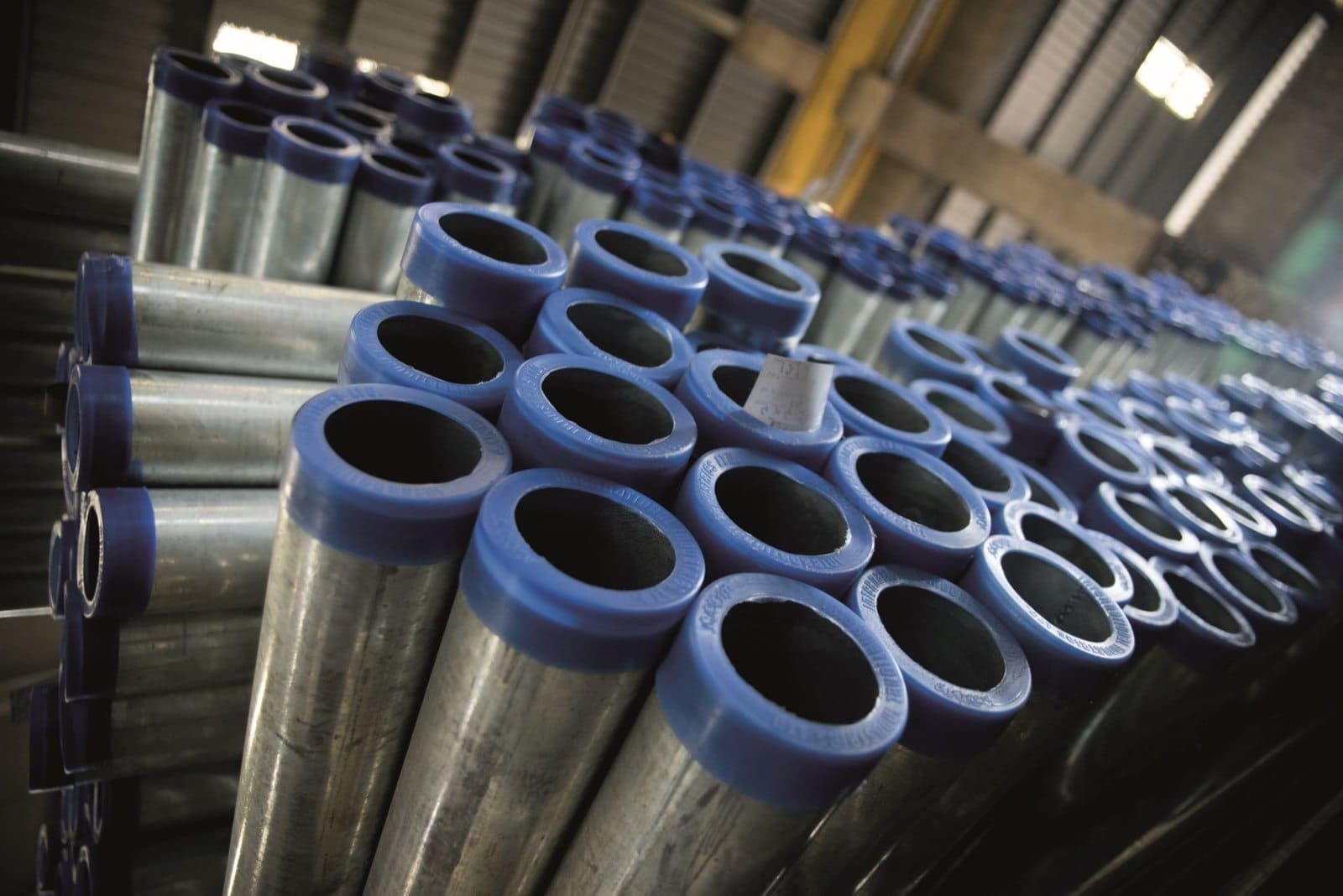
  • Stacked hot-dip galvanised steel pipes and tubes with blue protective end caps inside a warehouse.
    · buying advice· pipes and tubes

    How to Choose a Scaffold Tube Supplier for a Construction Project

    Choose a scaffold tube supplier on what it will confirm in writing — the tube's material, finish, size and wall thickness, how much it can supply and when, how it delivers, and what paperwork comes with the material — rather than on the price per length alone.

    Read the article
  • · buying advice· pipes and tubes

    Tube and Fitting Scaffold Materials: What Goes on the Order and How to Check It

    A tube and fitting order is only complete when every component the design calls for is on it — tubes by length, each type of coupler, boards, base plates, ties and edge protection — and when each of those has been checked to work with the others before it leaves the supplier's yard.

    Read the article
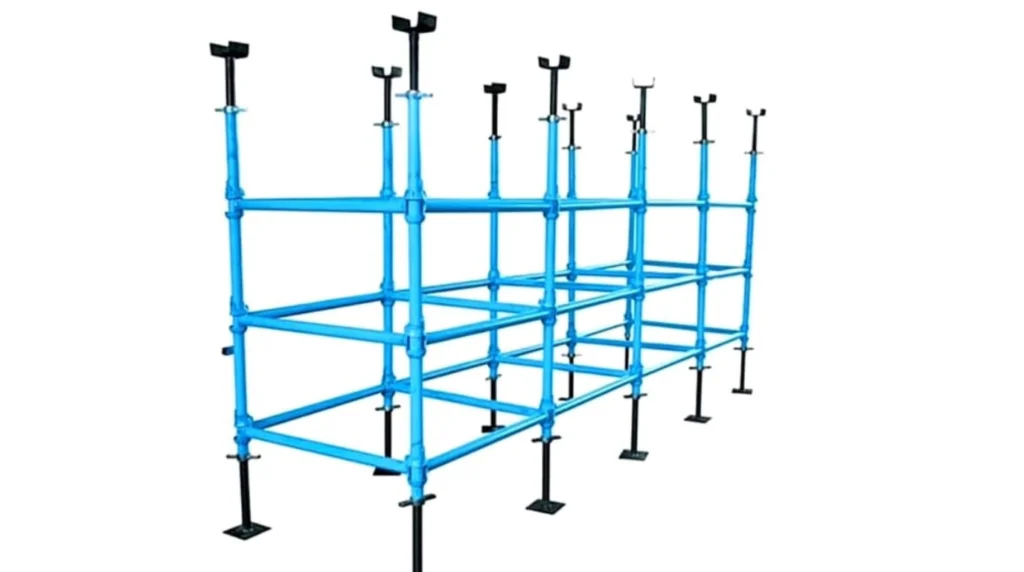
  • Blue steel cup lock scaffold frame with adjustable screw jacks at the base and U-heads at the top, photographed on a white background.
    · procurement· construction

    Procuring Scaffolding Materials for Large Construction Projects

    On a large project, scaffolding materials are bought in phases that follow the programme: the requirement comes from approved drawings, the supplier is asked about capacity and phased delivery before award, and one person on the buying side controls changes so that procurement, the site and the scaffolding contractor work from the same list.

    Read the article
  • · procurement· buying advice

    How to Prepare a Scaffolding Materials Request for Quotation

    A good request for quotation tells the supplier who you are, what the project is, exactly which materials and quantities you need — ideally from drawings or a material list — what documents must come with them, and when and where they must be delivered. The more of that is clear, the more accurate and comparable the quotations will be.

    Read the article
  • Blue steel cup lock scaffold frame with adjustable screw jacks at the base and U-heads at the top, photographed on a white background.
    · buying advice· products

    Buying Scaffolding for Your Own Stock: What Contractors Should Plan

    Buying scaffolding for your own stock pays off when the same material will be used job after job. Standardise on one system, size the stock to your regular work rather than your largest job, plan the yard, inspection and record-keeping before the material arrives, and cover peaks with hire.

    Read the article
  • · procurement· industrial

    Scaffolding Materials for Industrial Shutdowns: Procurement and Supplier Coordination

    Shutdown scaffolding material is bought before the plant stops: the requirement comes from the access list, orders and deliveries are fixed to the shutdown dates with material staged in advance, material is identified and documented so it can be found and checked quickly, and the supplier agrees in advance how emergent work will be supplied.

    Read the article
  • · procurement· buying advice

    How to Compare Scaffolding Material Quotations

    Compare scaffolding quotations line by line, not total against total: check that each one quotes the same materials, specification and quantities, read the exclusions and assumptions, and confirm delivery, timing and the cost of changes. The lowest headline price is only the cheapest if everything else is equal.

    Read the article
  • Stacked hot-dip galvanised steel pipes and tubes with blue protective end caps inside a warehouse.
    · pipes and tubes· procurement

    Scaffold Tube Specifications: What Buyers Need to Confirm

    The scaffold design decides the tube specification; the buyer's job is to record it completely — material, finish, outside diameter, wall thickness, length and any standard or document the project names — confirm each item with the supplier in writing, and avoid buying by trade description.

    Read the article
  • · procurement· industrial

    Sourcing Scaffolding Materials for Oil and Gas Projects

    Buying scaffolding materials for oil and gas work means confirming the project's own requirements first — specification, finish, documentation and any vendor requirements the operator sets — then choosing a supplier that can meet them in writing, deliver within the site's rules and keep up when the schedule changes.

    Read the article
  • Stacked hot-dip galvanised steel pipes and tubes with blue protective end caps inside a warehouse.
    · procurement· pipes and tubes

    Planning a Scaffold Tube and Fitting Order: From Approved List to Delivery

    Plan a tube and fitting order in four steps: turn the approved material list into an order with every description and quantity checked, fill the gaps before asking for a price, agree how deliveries and changes will work, and check each delivery on arrival against the order.

    Read the article
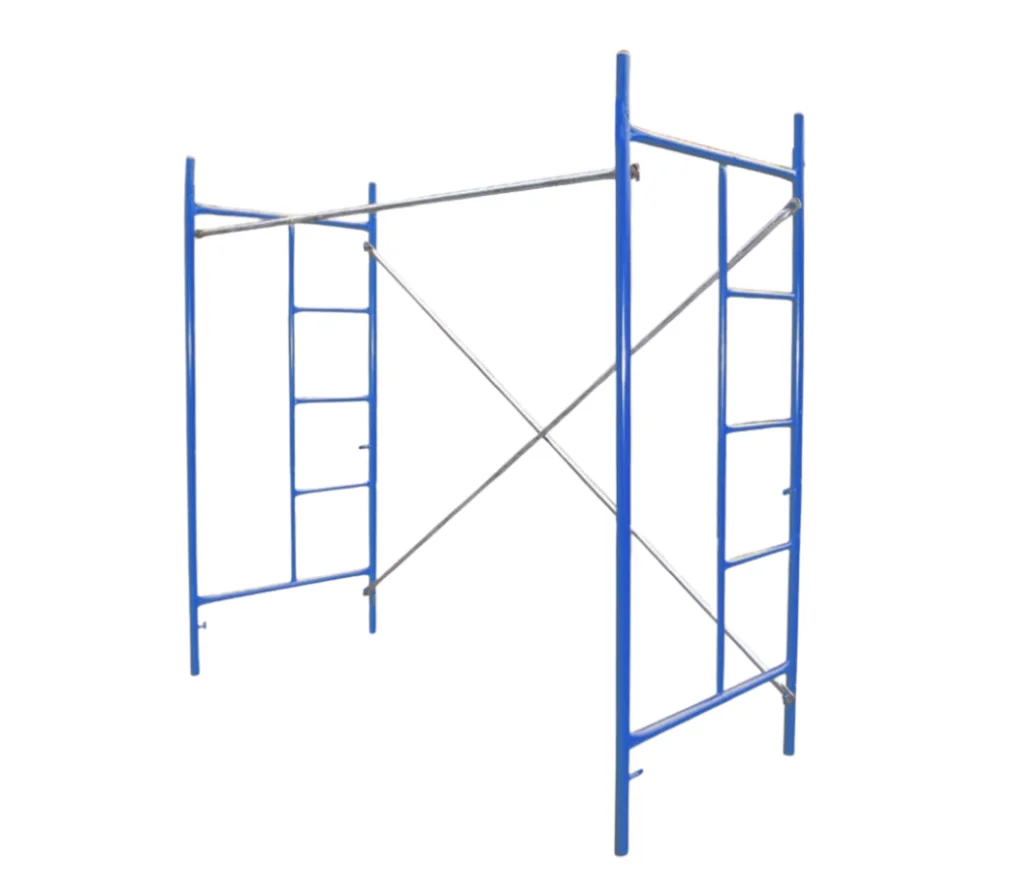
  • Two blue-painted steel H frames with diagonal cross bracing and built-in access rungs, shown against a white background.
    · scaffolding systems· products

    H Frame Scaffolding Explained

    H frame scaffolding is built from prefabricated welded frames joined by cross braces and stacked lift on lift; because each frame arrives as one piece with its rungs built in, a run of repeated bays goes up faster than a scaffold assembled member by member — at the cost of the flexibility a modular or tube system offers.

    Read the article
  • Two blue-painted steel H frames with diagonal cross bracing and built-in access rungs, shown against a white background.
    · scaffolding systems· system comparison

    Cuplock vs H Frame vs Tube and Fitting

    Choose H frames for repeated, regular bays where speed matters; cuplock where the same modular system has to carry heavier loads, be reconfigured between lifts or double as shoring; and tube and fitting where the structure is irregular and every member has to go where the geometry demands.

    Read the article
  • Galvanised adjustable prop jack with a threaded collar and top and base plates, shown beside a threaded coupler, a U-head pin and a threaded tube on a white background.
    · formwork· products

    Prop Jacks and Push-Pull Props

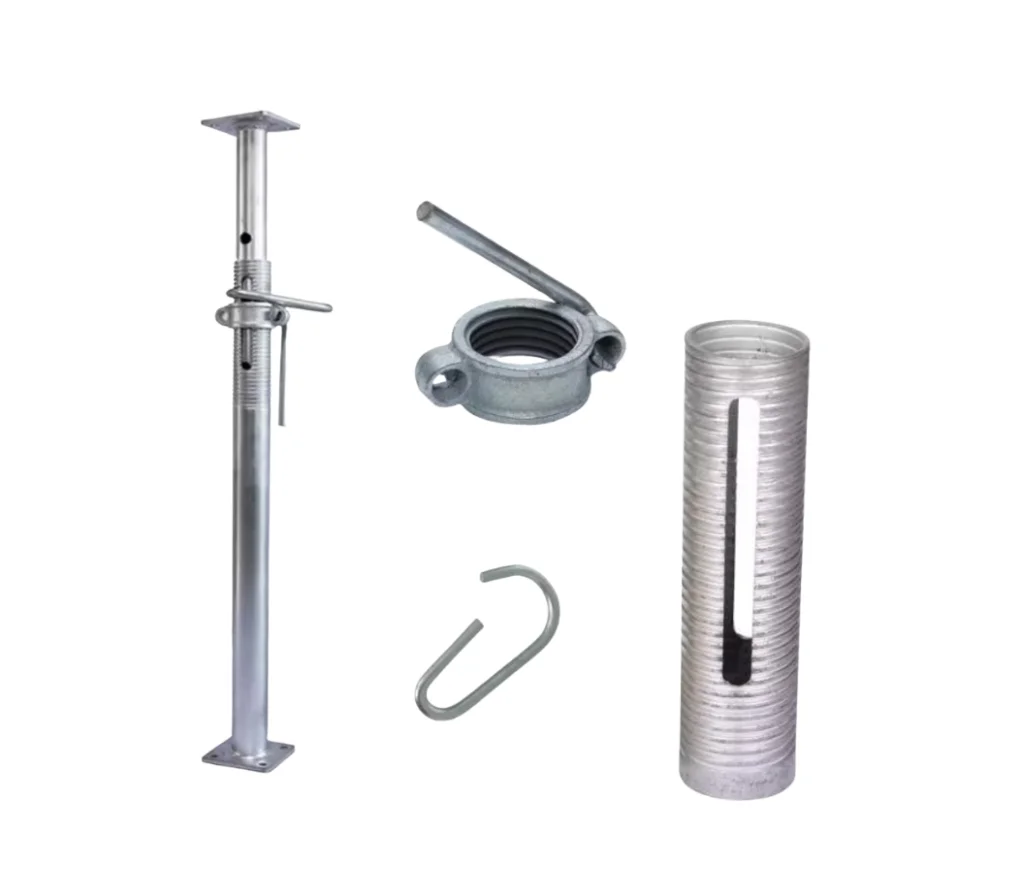
    Prop jacks are adjustable steel props set vertically to carry formwork or a structure while it cannot carry itself; push-pull props are set diagonally to hold wall forms and elements plumb. Both adjust with a threaded collar, and both are set and released to a plan rather than by feel.

    Read the article
  • Six hot-dip galvanised cup lock standards of different lengths, each with a fixed lower cup at intervals, shown against a white background.
    · scaffolding systems· formwork

    Scaffolding vs Shoring

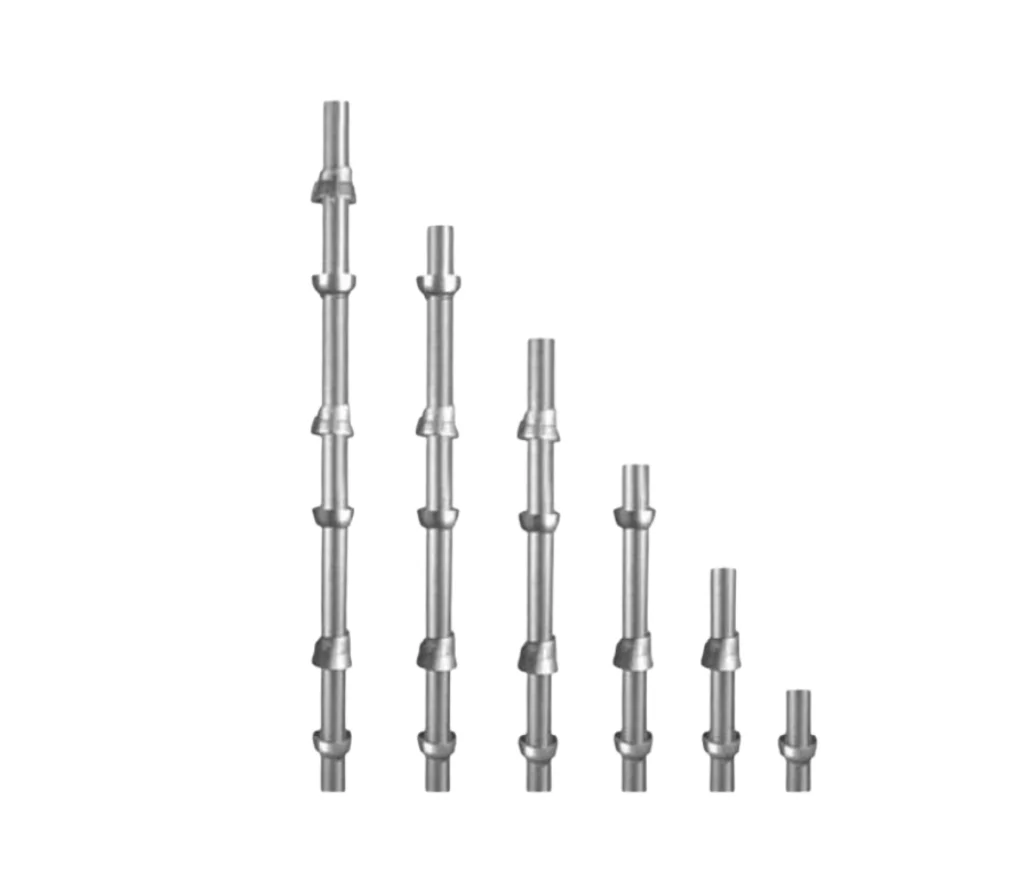
    Scaffolding gives people a safe place to work; shoring holds up a structure — formwork, wet concrete or an element under repair — until it can carry itself. The same modular components can do either job, but shoring is designed for heavier, sustained loads and is never adapted on site without the designer.

    Read the article
  • Illustration of a scaffold tied back to a masonry wall with tie tubes and anchors at each lift.
    · scaffolding systems· design

    Scaffold Ties Explained

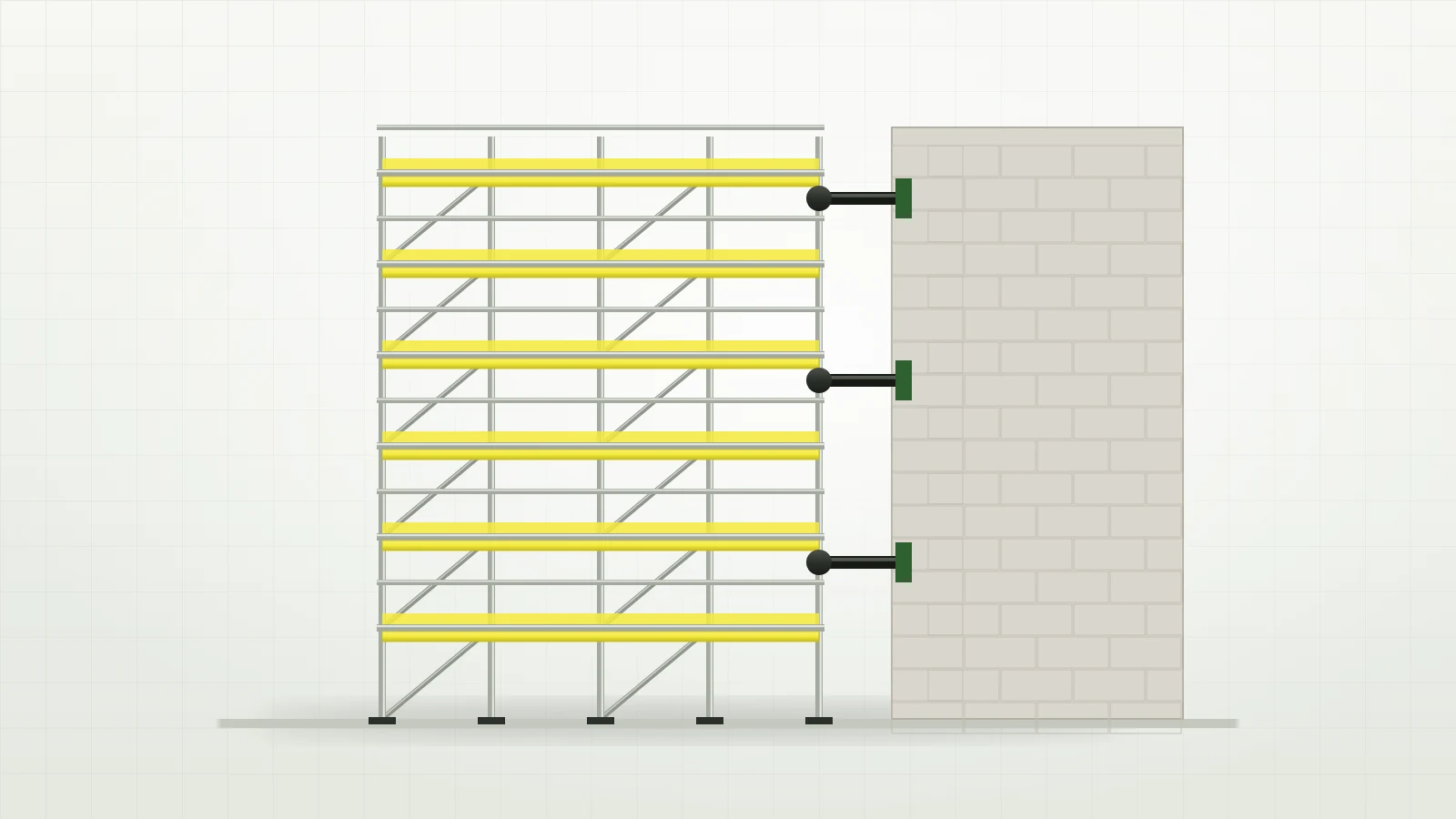
    A tie connects the scaffold to the structure so it cannot lean away from the building or towards it. Tie positions and frequency come from the design — more for sheeted or exposed scaffolds — and a tie is never moved or removed without the person responsible for the scaffold agreeing a replacement.

    Read the article
  • Blue steel cup lock scaffold frame with adjustable screw jacks at the base and U-heads at the top, photographed on a white background.
    · design· safety

    Scaffold Foundations

    Every scaffold leg ends in a base plate, usually on a sole board that spreads its load over the ground, with an adjustable jack where the ground is uneven. The design checks that the ground, slab or structure beneath can carry each leg load, because a failed foundation fails the whole scaffold.

    Read the article
  • Illustration of scaffold edge protection: a boarded platform with a toe board, mid rail and top rail fixed to the standards, with height marks.
    · safety· inspection

    Scaffold Edge Protection

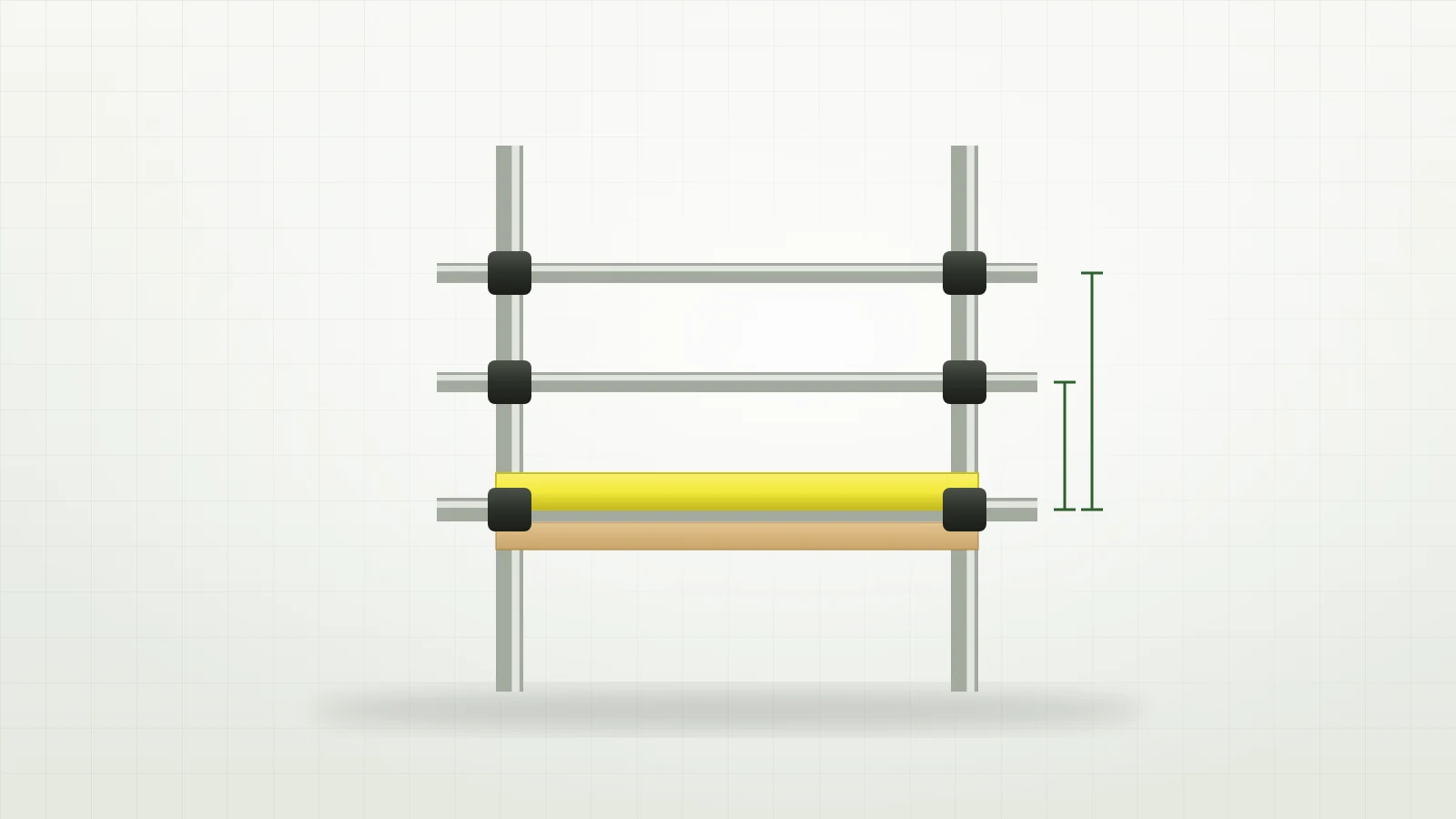
    Edge protection is the collective barrier on every open edge of a scaffold platform: a top guardrail and an intermediate rail to stop people falling, and a toe board — with brick guards or netting where material is stacked — to stop tools and materials falling on people below.

    Read the article
  • Illustration of a scaffold anchor point with a lanyard clipped to a full-body harness.
    · safety· products

    Fall Protection on Scaffolds

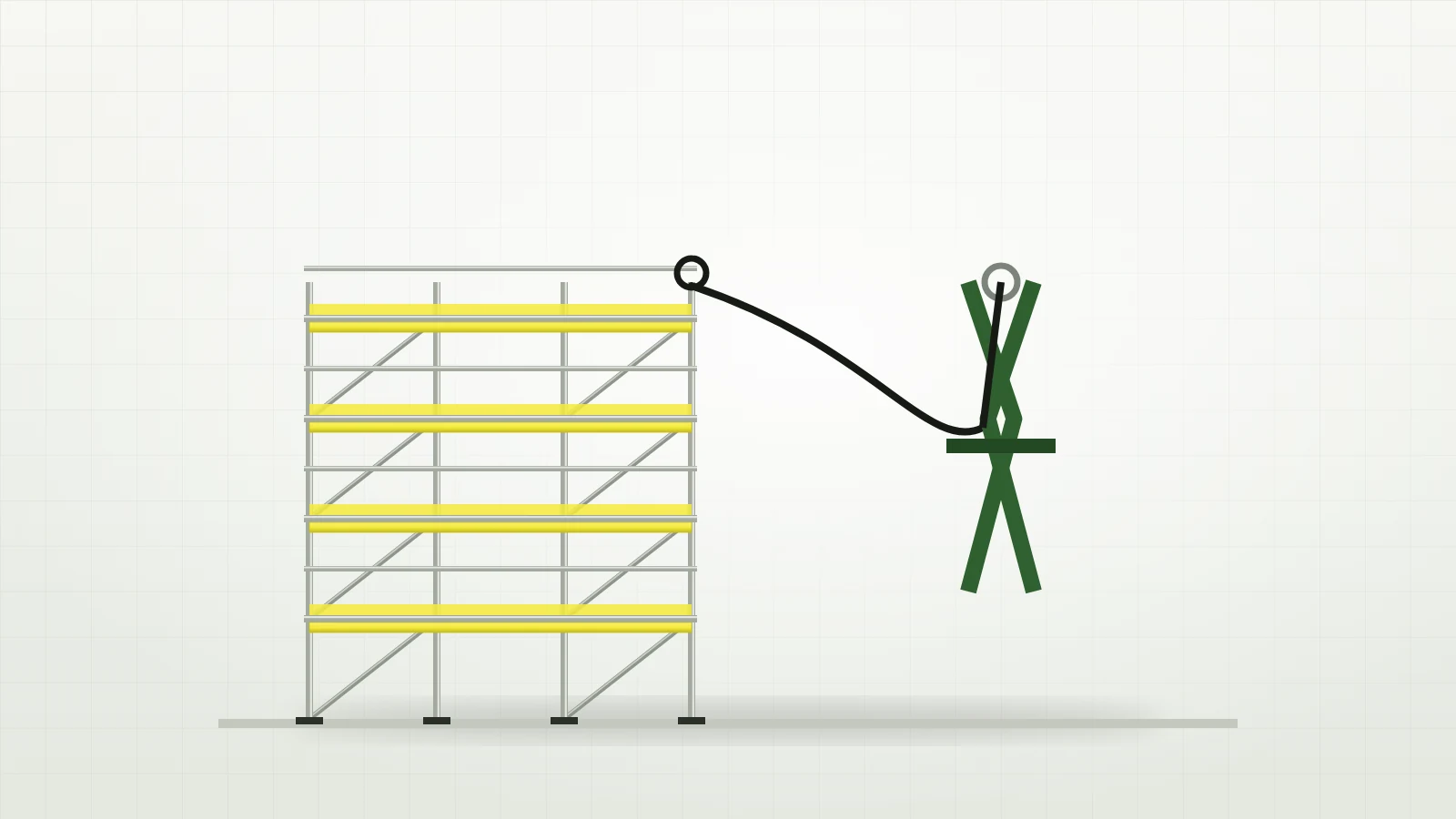
    Personal fall protection — a full-body harness connected by a lanyard to a suitable anchor — protects a person where collective protection is not yet in place, such as during erection and dismantling. It only works when the anchor, the lanyard and a plan to rescue someone who has fallen are all part of the arrangement.

    Read the article
  • Illustration of a netted scaffold with a shade canopy over the working lift under a strong sun.
    · safety· planning

    Working at Height in the UAE Summer

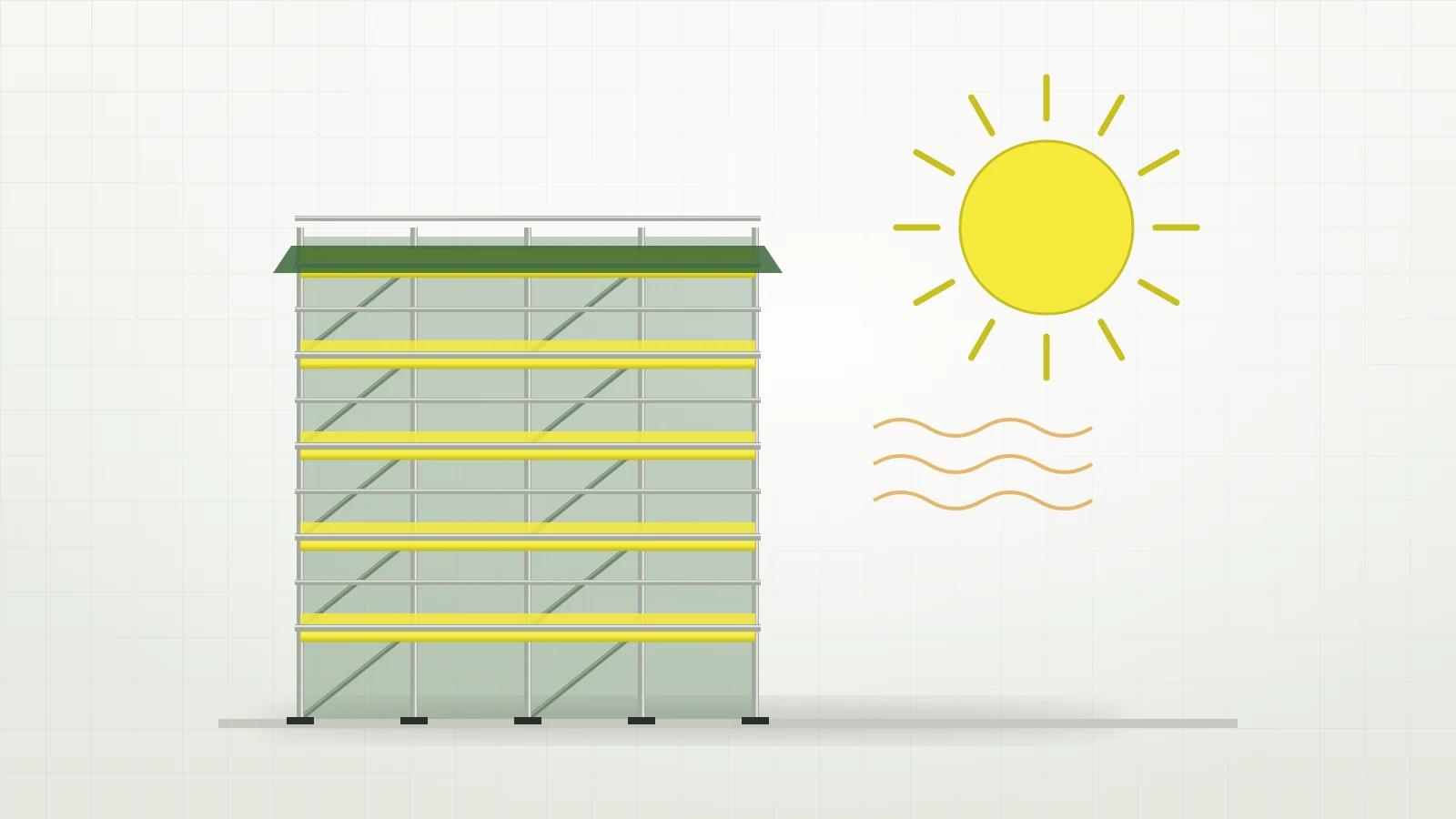
    In the UAE summer the main risk on a scaffold is often the heat rather than the height: fatigue and loss of grip build through a shift, so work is planned for the cooler hours and within any working-hour rules that apply to the site, crews rotate, water and shade are provided, and the heaviest handling is done early.

    Read the article
  • Illustration of a sheeted scaffold tied to a building, with wind lines blowing against the sheeting.
    · safety· design

    Scaffolding and Wind

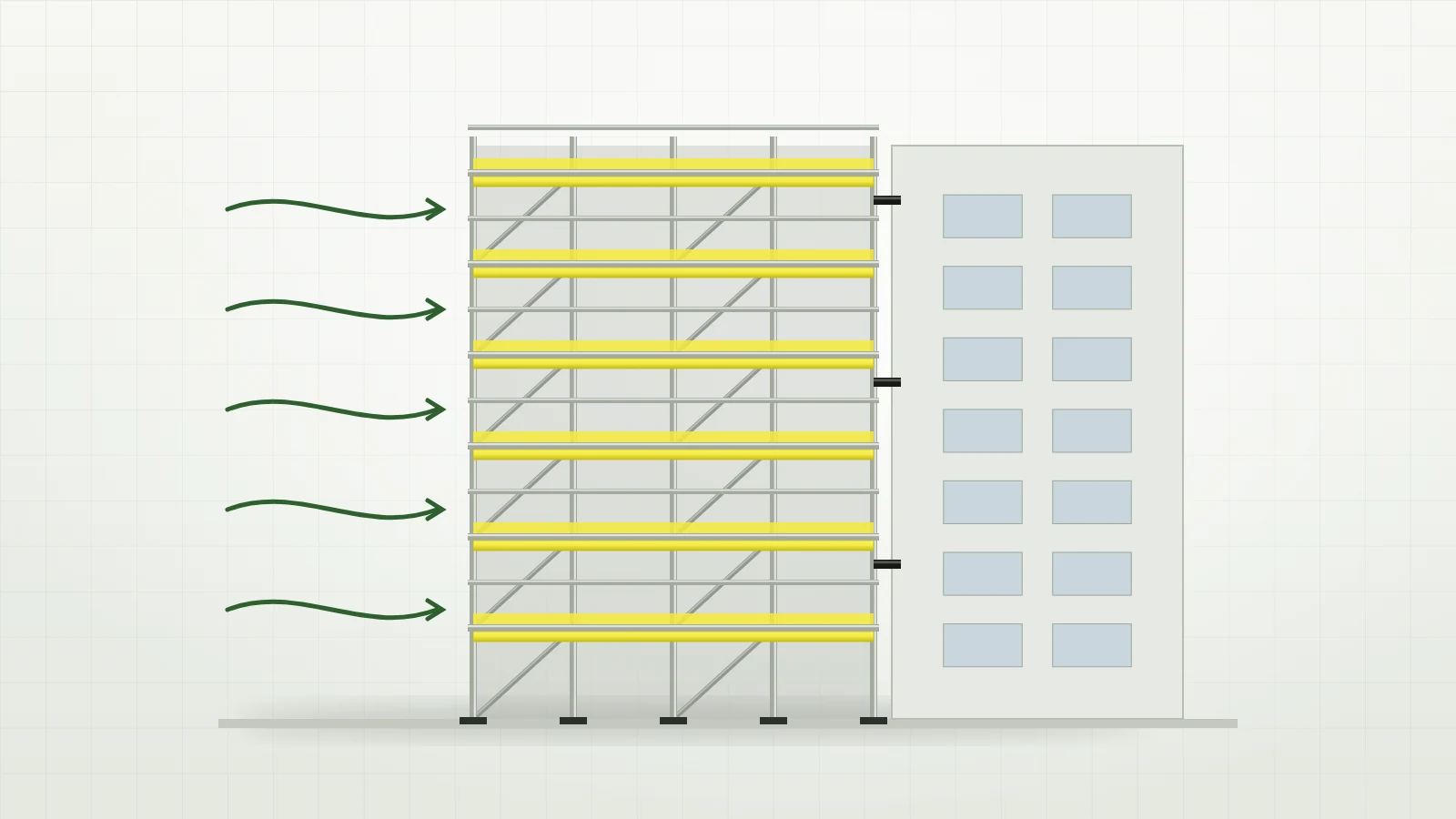
    Wind pushes on everything attached to a scaffold, so a sheeted or netted scaffold — or a hoarding — must be designed and tied for that load. When wind rises, loose material and boards are secured or brought down, work at exposed edges stops, and the scaffold is inspected before anyone returns to it.

    Read the article
  • Three blue-painted steel transoms of different lengths, each with an end fitting at both ends, photographed against a white background.
    · safety· design

    Loading a Scaffold Platform Safely

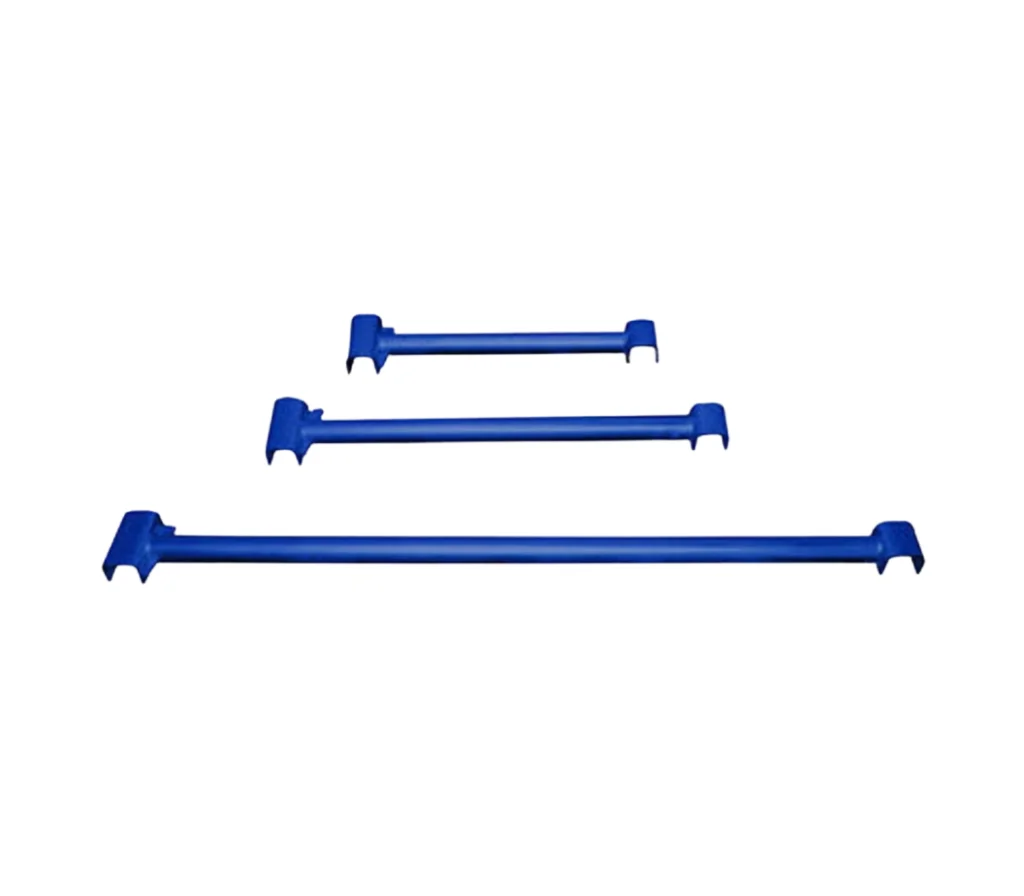
    A scaffold platform may carry only what its design allows, so the load it is designed for is made known to everyone using it; materials are spread rather than heaped, kept close to the standards and away from open edges, and anything heavier or more concentrated than the design expects is cleared with the scaffold's designer first.

    Read the article
  • Illustration of a scaffold with one bay outlined for alteration and a ledger being lifted out, beside a scaffold tag.
    · safety· inspection

    Scaffold Alterations and Modifications

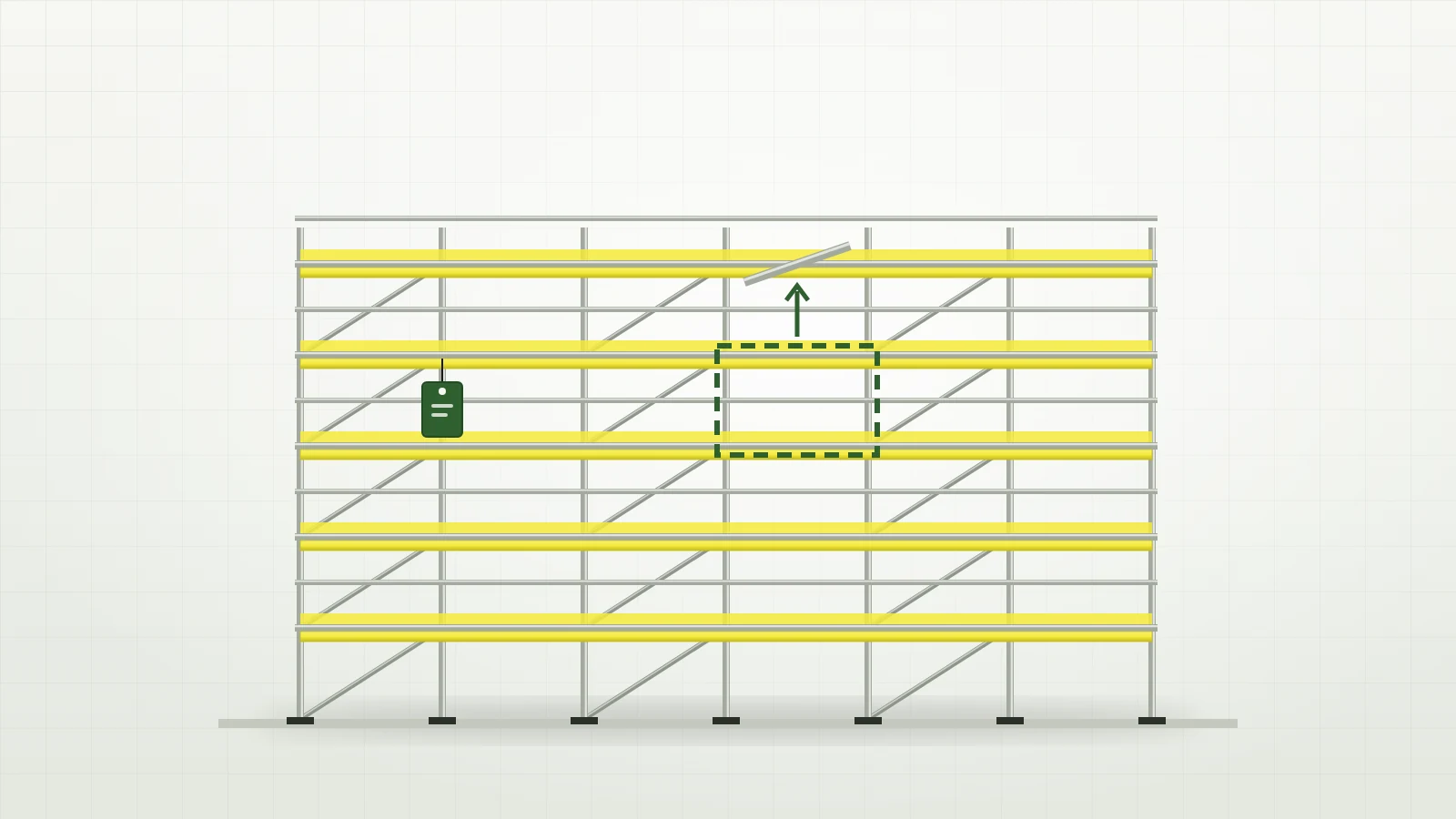
    Only the scaffolding team should alter a scaffold. Anything that changes it — moving a board, removing a guardrail or tie, adding a lift or extending a platform — is a modification: it is requested, checked against the design, carried out by the people responsible for the scaffold, and inspected before anyone uses it again.

    Read the article
  • Illustration of a scaffold design drawing: an elevation with lifts, bracing and dimension lines, a title block and a scale rule.
    · design· planning

    What a Scaffold Design Includes

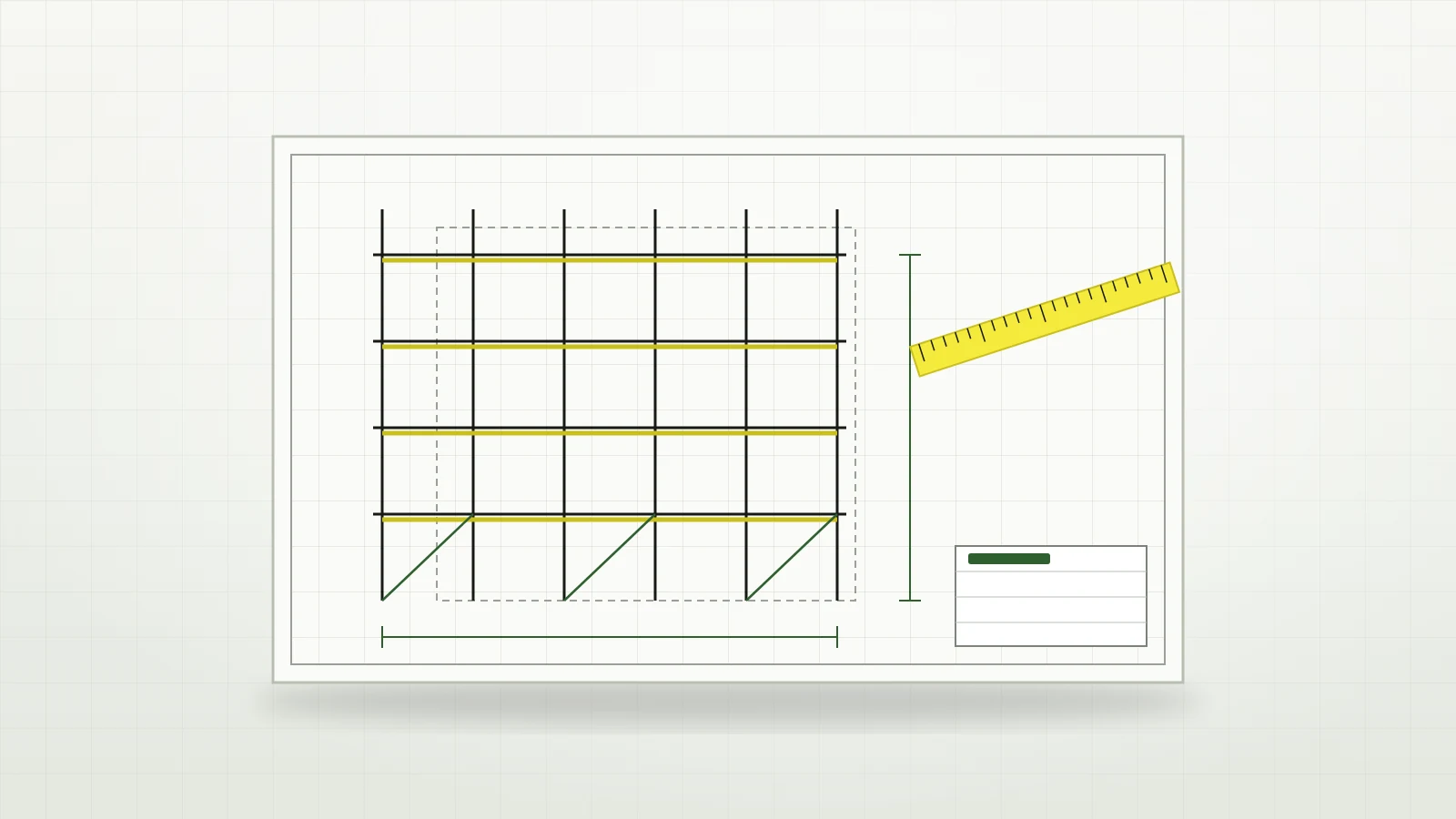
    A scaffold design turns a site survey into drawings that show the layout and lifts, the working loads the platforms are designed for, the loads each leg puts into the ground, where the scaffold is tied, and a material list that names every component — all issued for approval before anything is delivered.

    Read the article
  • Blue steel cup lock scaffold frame with adjustable screw jacks at the base and U-heads at the top, photographed on a white background.
    · planning· safety

    Scaffold Erection and Dismantling Sequence

    A scaffold goes up from a level, prepared base: base plates and sole boards, then standards and the first lift of ledgers and transoms, bracing, ties as the height grows, then boards, guardrails and toe boards — and it is handed over only once complete and inspected. Dismantling runs in reverse, with ties removed only as the lifts above them come down.

    Read the article
  • Illustration of process plant columns, platforms and pipework with a scaffold erected around one column.
    · planning· industrial

    Planning Scaffolding for Shutdowns and Turnarounds

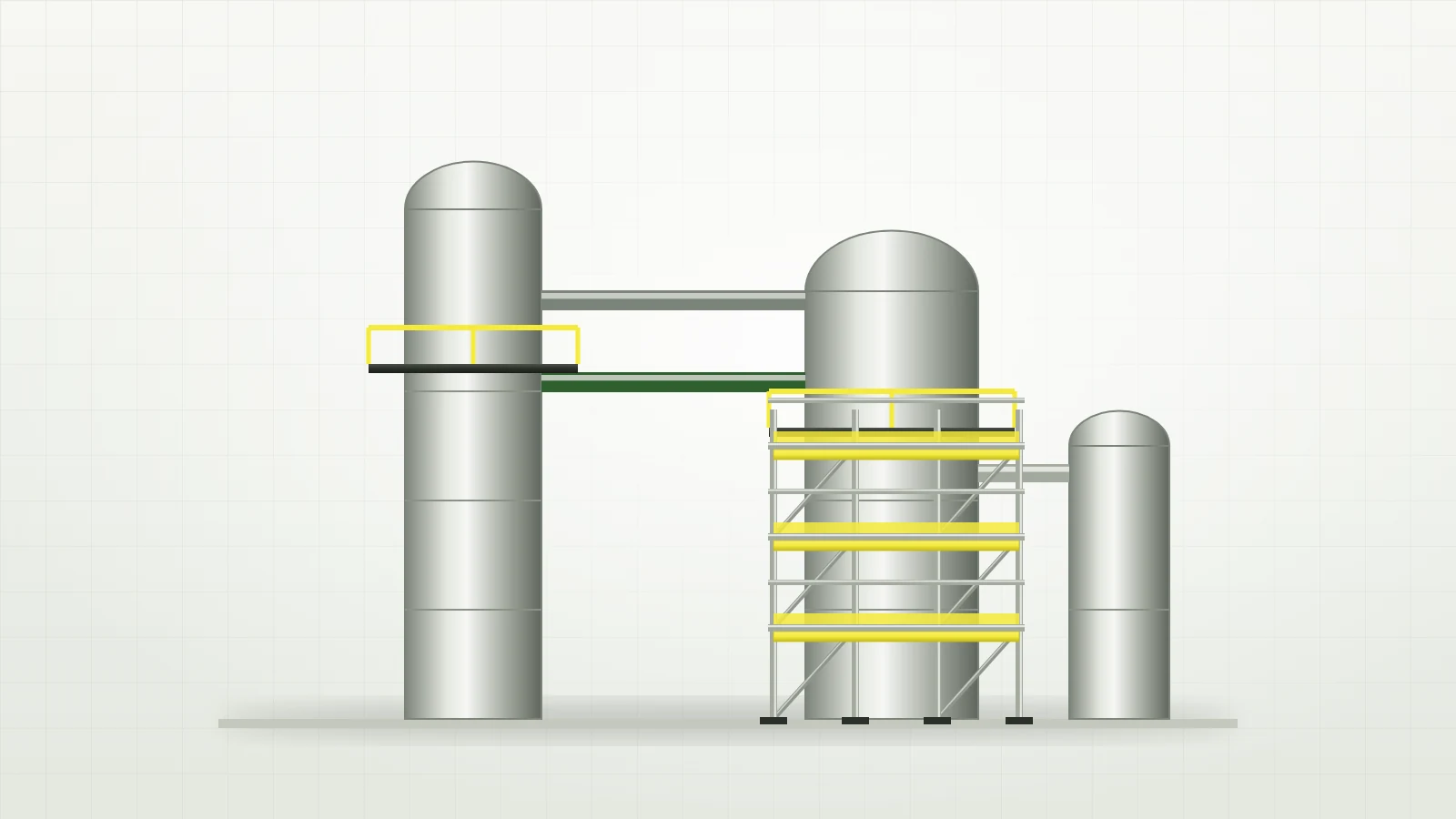
    Shutdown scaffolding is planned before the plant stops: the access list is agreed from the work scope, designed and staged so erection starts as soon as permits allow, supported by crews ready for changes, and inspected and struck in a sequence that hands the plant back on time.

    Read the article
  • Aluminium ladder standing in front of stacked aluminium formwork panels and profiles in the GH Scaffolds warehouse.
    · access equipment· planning

    Ladder, Tower or Scaffold?

    Use a ladder only for short, light work where a platform is not practical; a mobile or static tower when one trade needs a stable platform for hours or days; and a scaffold when the work is long, wide, heavy or shared by several trades.

    Read the article
  • Six hot-dip galvanised cup lock standards of different lengths, each with a fixed lower cup at intervals, shown against a white background.
    · buying advice· hire

    Choosing a Scaffolding Supplier

    Choose a scaffolding supplier that can show you a design and a material list for your job, supply the material from its own stock, erect and inspect it with its own trained teams, and quote hire and purchase side by side — those answers tell you more than a headline price.

    Read the article
  • Illustration of a netted scaffold on an occupied building, with a covered walkway over the entrance at street level.
    · planning· construction

    Scaffolding for Occupied Buildings and Refurbishment

    On a building that stays in use, the scaffold is planned around the people in and around it: entrances and footpaths stay open and protected, finished surfaces are not marked, noisy or disruptive work is timed with the occupants, and the access moves with the work so no more of the building is enclosed than necessary.

    Read the article
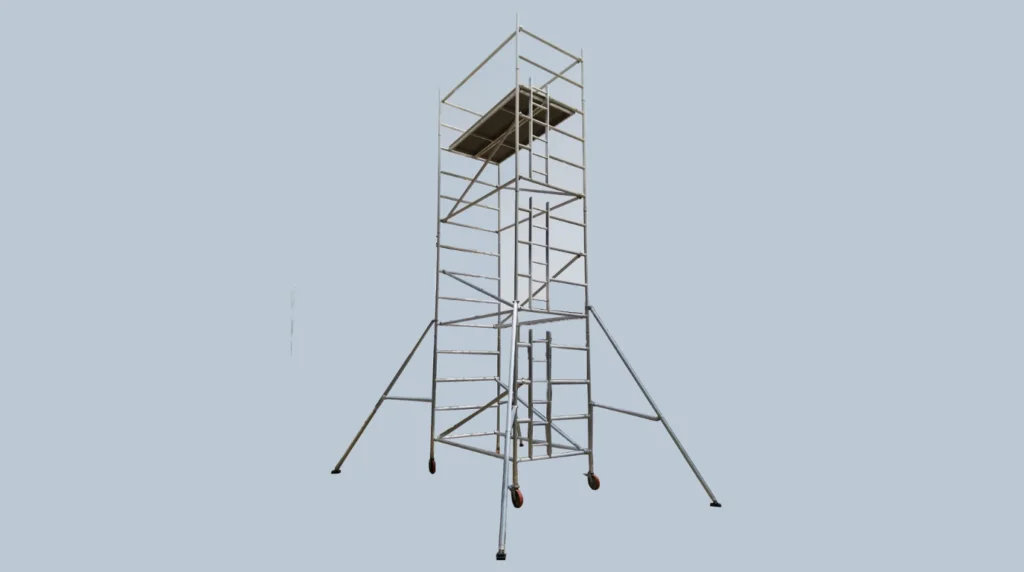
  • Aluminium mobile access tower on castors with stabiliser outriggers and a platform in place at the top, photographed against a plain pale background.
    · access equipment· planning

    Internal Scaffolding

    Access inside a building is planned around the floor, the height and how material gets in: aluminium towers for single trades and moving work, internal scaffolds where work runs along walls or up voids, and full-area platforms where a whole ceiling has to be reached — each sized to fit doors, stairs and lifts.

    Read the article
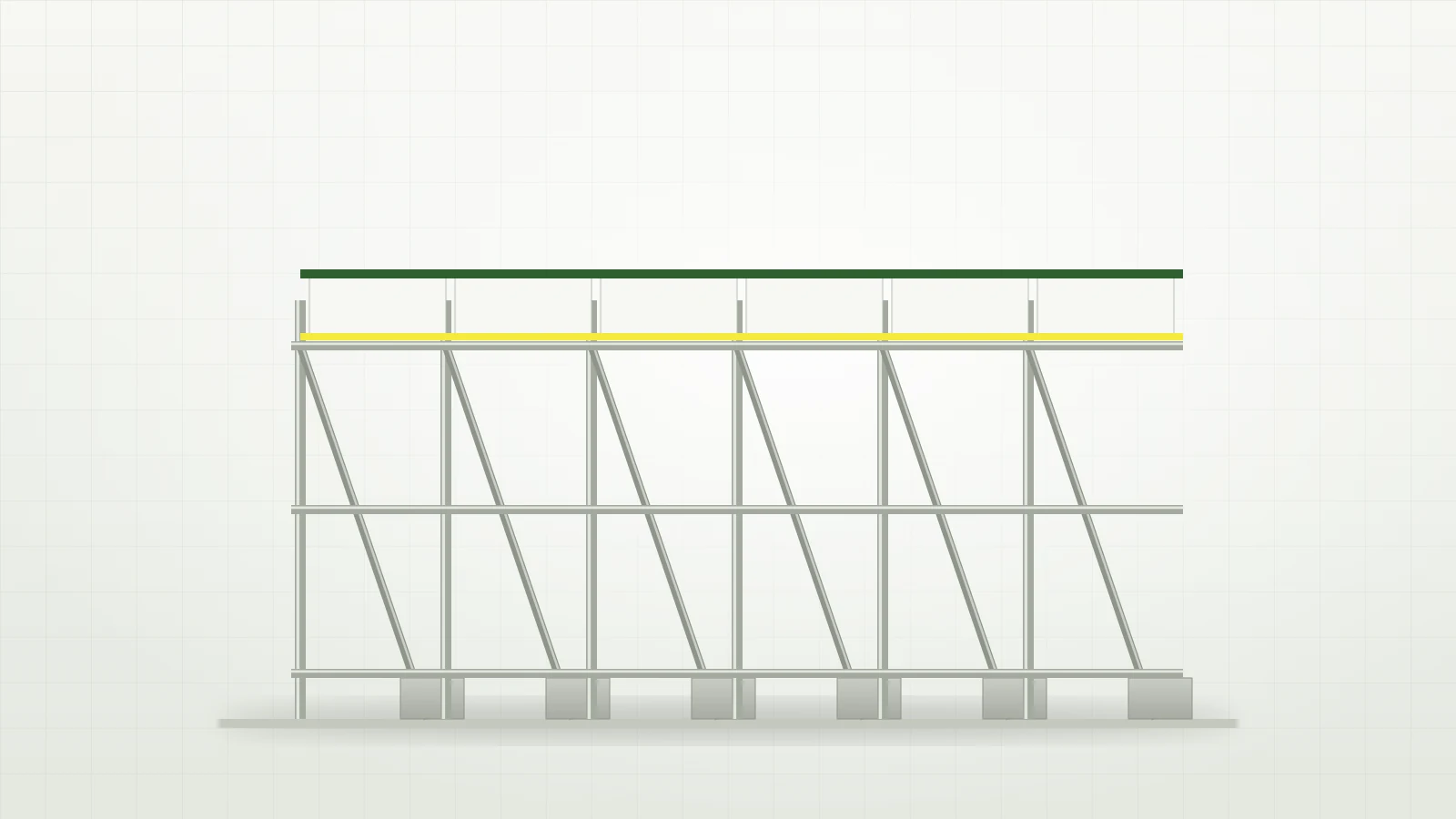
  • Illustration of a scaffold-framed hoarding seen from the site side: panels on tube posts, raking braces and ballast blocks.
    · planning· construction

    Scaffold Hoardings Explained

    A scaffold hoarding is a site boundary built from a scaffold frame with panels or sheeting fixed to it: quick to erect, able to follow an irregular boundary and simple to remove. Because a solid hoarding acts like a wall in the wind, its frame, bracing and base are designed for that load.

    Read the article
  • Blue steel cup lock scaffold frame with adjustable screw jacks at the base and U-heads at the top, photographed on a white background.
    · scaffolding systems· products

    What Is Cuplock Scaffolding?

    Cuplock is a modular steel scaffolding system in which ledgers lock to vertical standards at fixed cup nodes: a fixed lower cup receives the ledger ends and a movable upper cup is driven down over them, so several members lock at one node with a single hammer action and no loose couplers.

    Read the article
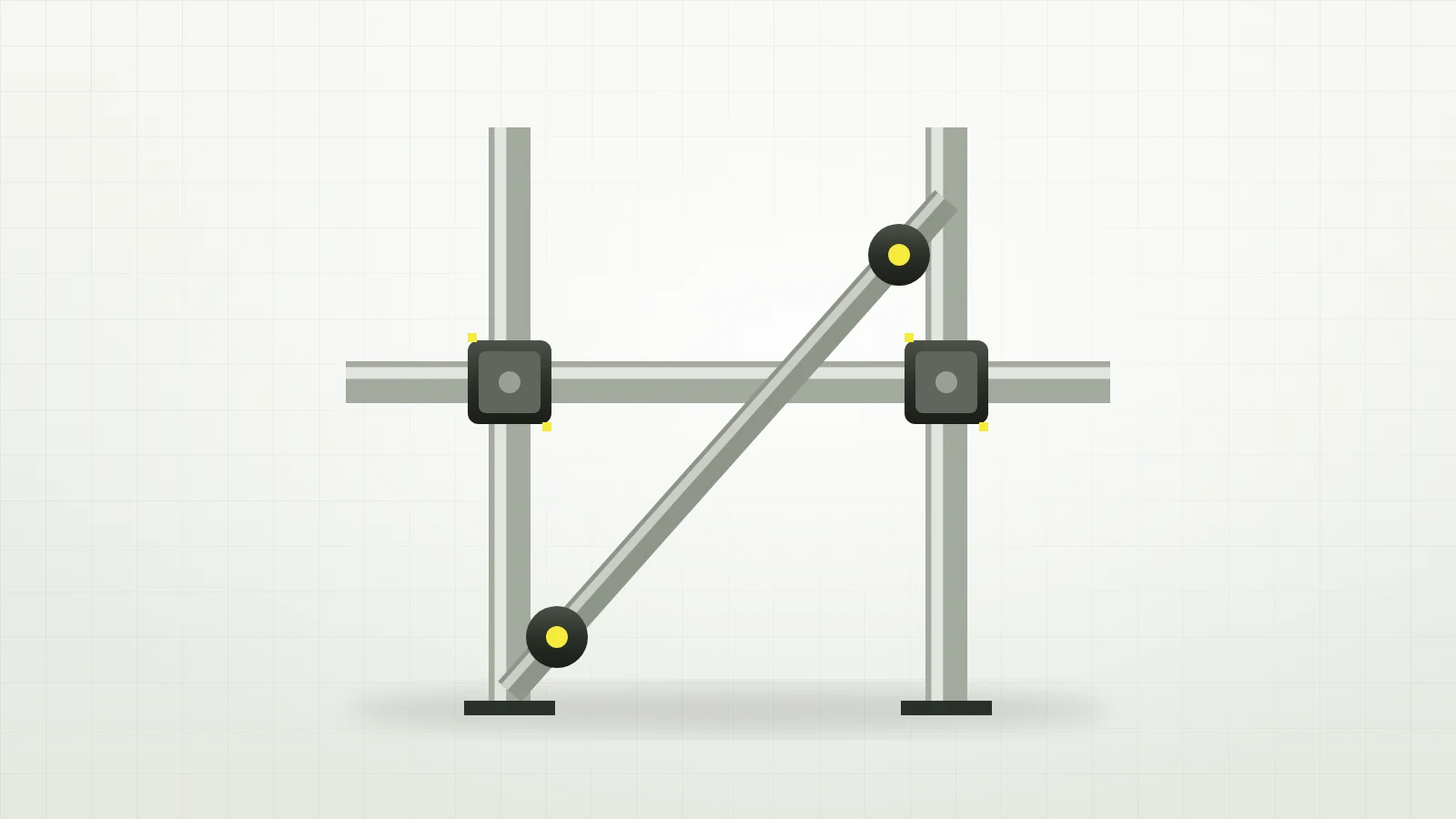
  • Illustration of a tube-and-fitting scaffold node: two standards and a ledger joined by right-angle couplers, with a diagonal brace on swivel couplers.
    · scaffolding systems· pipes and tubes

    Tube and Fitting Scaffolding Explained

    Tube and fitting scaffolding is built from straight steel tubes joined by clamp-on couplers, so every member can be placed at any height and angle; that freedom is why it is used where a modular system's fixed nodes cannot follow the structure — around plant, pipework and stepped facades.

    Read the article
  • Illustration comparing two pipe sections side by side: a hot-dip galvanised pipe and a black carbon steel pipe.
    · pipes and tubes· materials

    GI Pipe vs Carbon Steel Pipe for Scaffolding

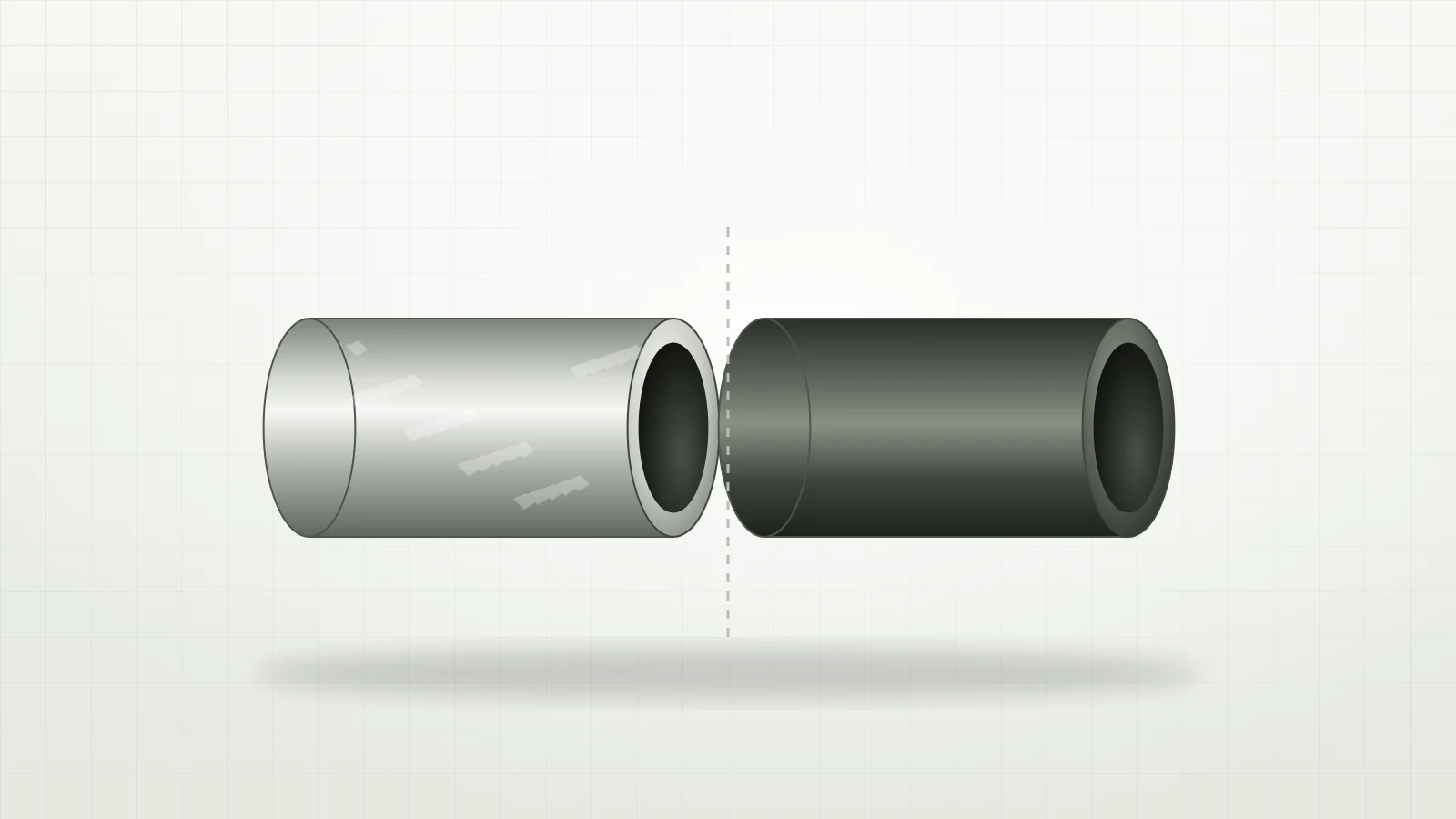
    Use GI (hot-dip galvanised) pipe where the scaffold or framework stands outdoors, near the coast or in industrial air, because the zinc coating protects the steel; plain carbon steel pipe suits load-bearing and fabrication work where it is protected or painted. The steel underneath is the same — the difference is the coating.

    Read the article
  • Three galvanised steel ledgers of different lengths, each with an end fitting at both ends, photographed against a white background.
    · scaffolding systems· reference

    Scaffolding Components and Terms

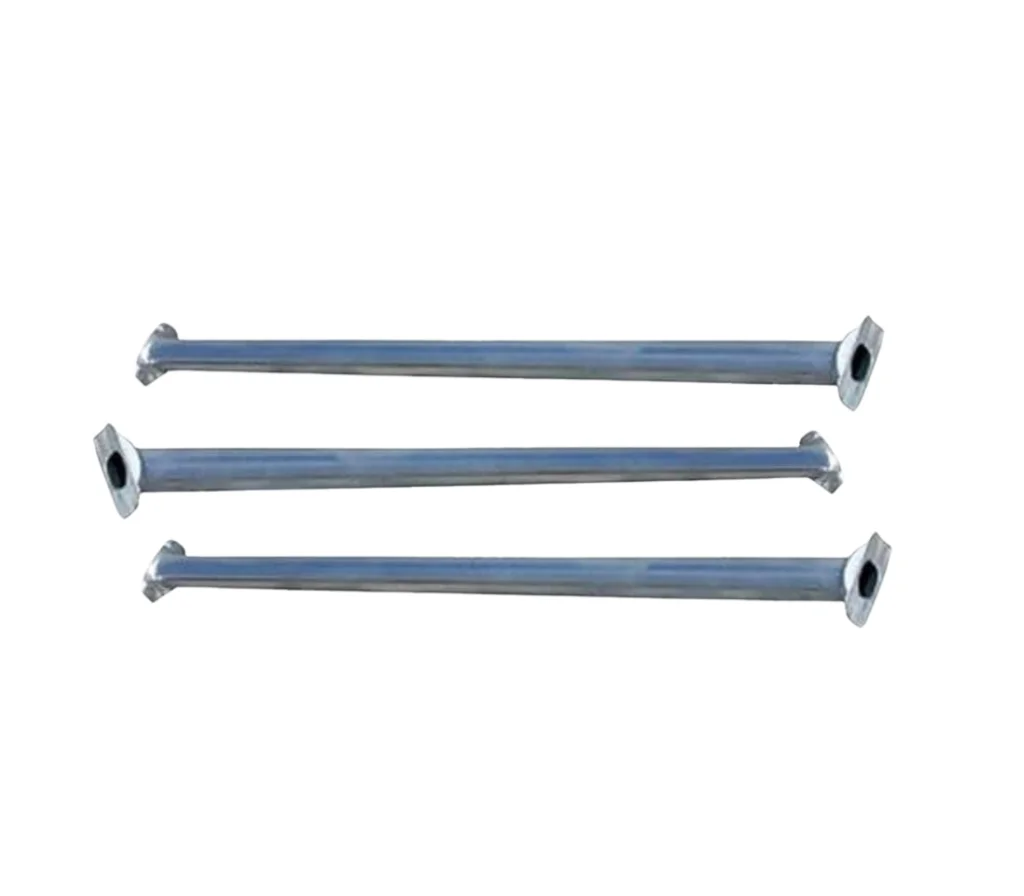
    A scaffold is built from vertical standards, horizontal ledgers that join them along the run, transoms that carry the boards across it, braces that stop it racking, base plates and sole boards that spread the load to the ground, and ties that hold it to the structure — plus the boards, guardrails and toe boards that make the platform safe.

    Read the article
  • Galvanised adjustable prop jack with a threaded collar and top and base plates, shown beside a threaded coupler, a U-head pin and a threaded tube on a white background.
    · formwork· materials

    Formwork and Shuttering Explained

    Formwork is the temporary mould that holds wet concrete to shape until it can carry itself; shuttering is the face of that mould the concrete is cast against. Together with the props, walers and ties that resist the pressure of the pour, they decide both the shape and the finish of the concrete.

    Read the article
  • Illustration of two buildings under construction wrapped in system scaffolding, with a tower crane between them.
    · planning· construction

    Planning Scaffolding for Large Construction Projects

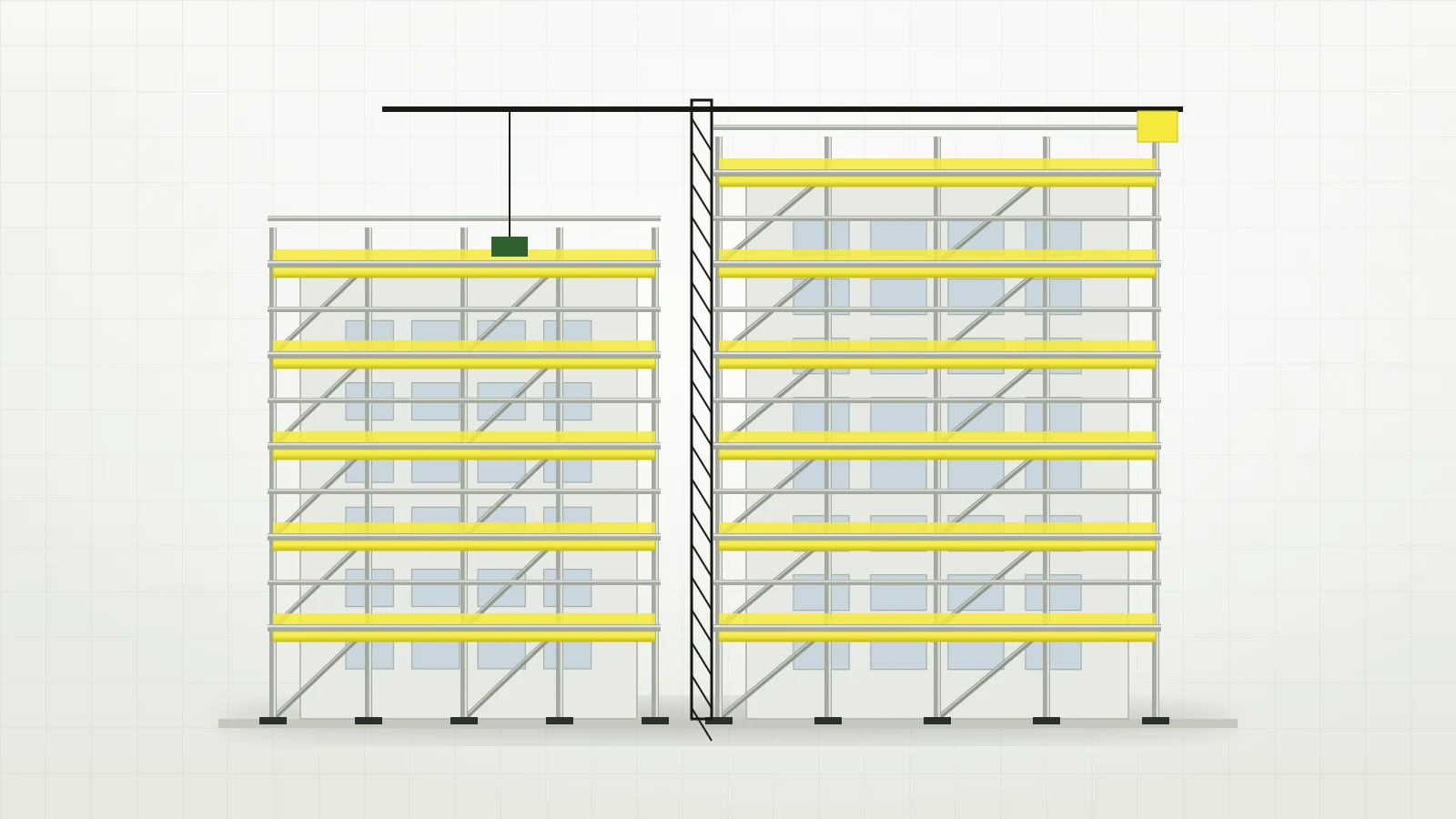
    On a large project the scaffold is planned as part of the programme, not ordered as a quantity: it is designed for the structure and the loads, phased so each zone is up when its trades arrive and struck when they leave, and inspected zone by zone so one change does not stop the whole site.

    Read the article
  • Illustration of a scaffold carrying an inspection tag beside a clipboard checklist with ticked items.
    · safety· inspection

    Scaffold Inspection Checklist

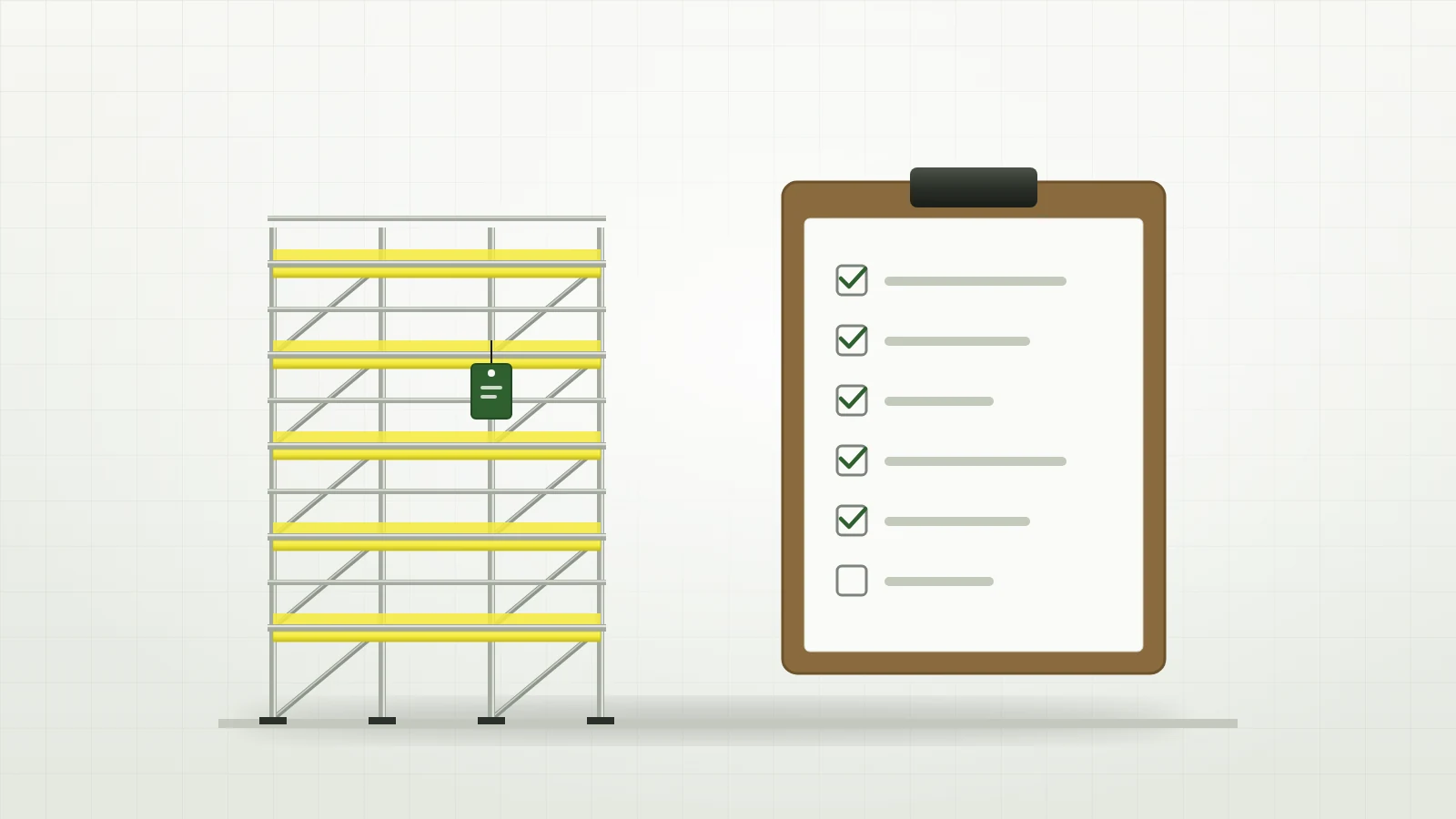
    A scaffold is inspected by a competent person before it is first used, at regular intervals while it stands, and again after anything that could have affected it — high wind, an impact, a modification — and each inspection is recorded so the next user can see the scaffold is fit to use.

    Read the article
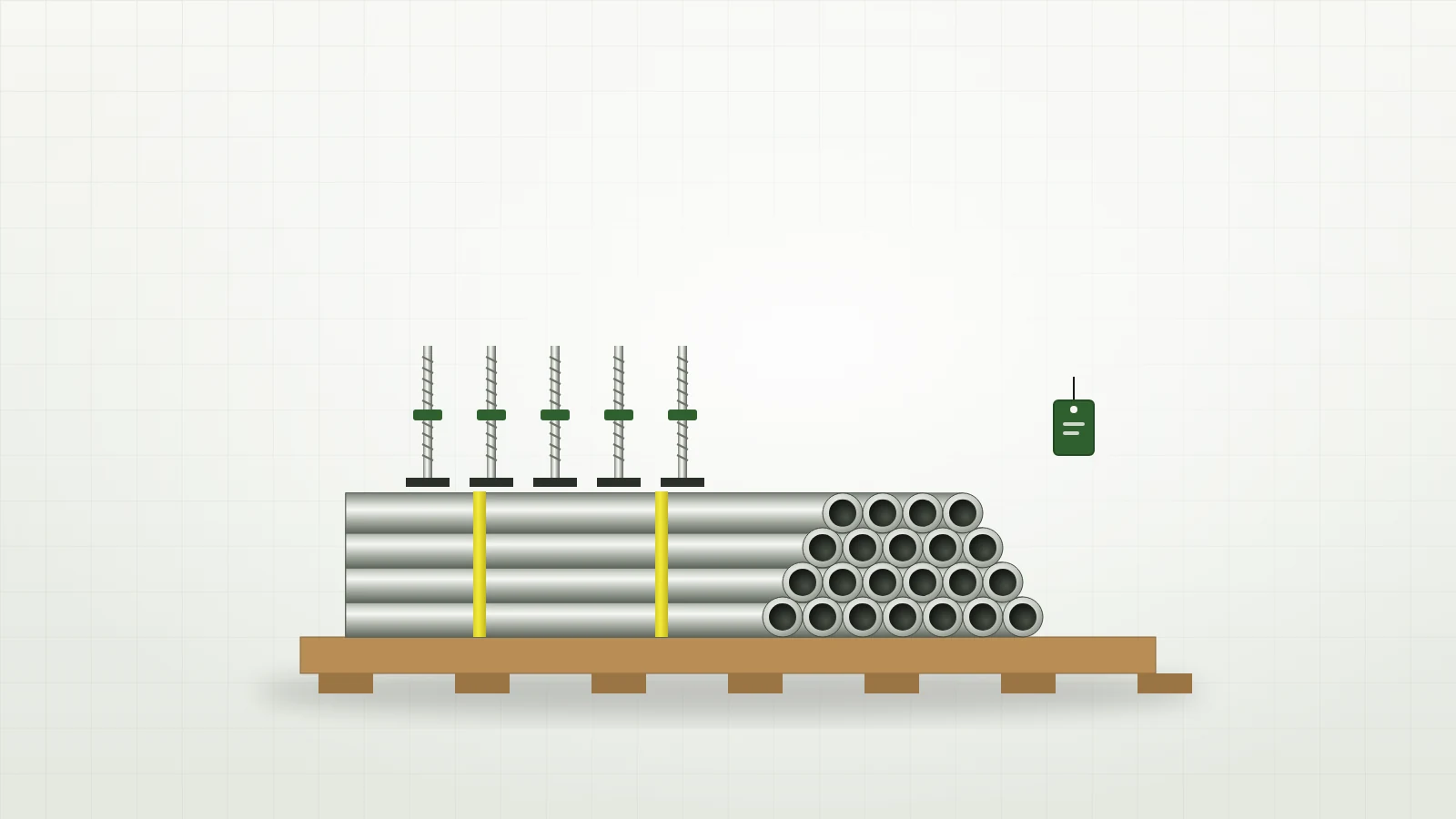
  • Illustration of scaffold stock ready for hire: a strapped bundle of tubes and a row of base jacks on a pallet, with a tag.
    · hire· buying advice

    How to Hire Scaffolding in the UAE

    To hire scaffolding, send the supplier what the access has to reach, what the platform will carry and for how long — ideally with drawings or a site address — and agree the hire period, delivery and collection, who erects it, and how damaged components and extensions are handled before the material leaves the yard.

    Read the article
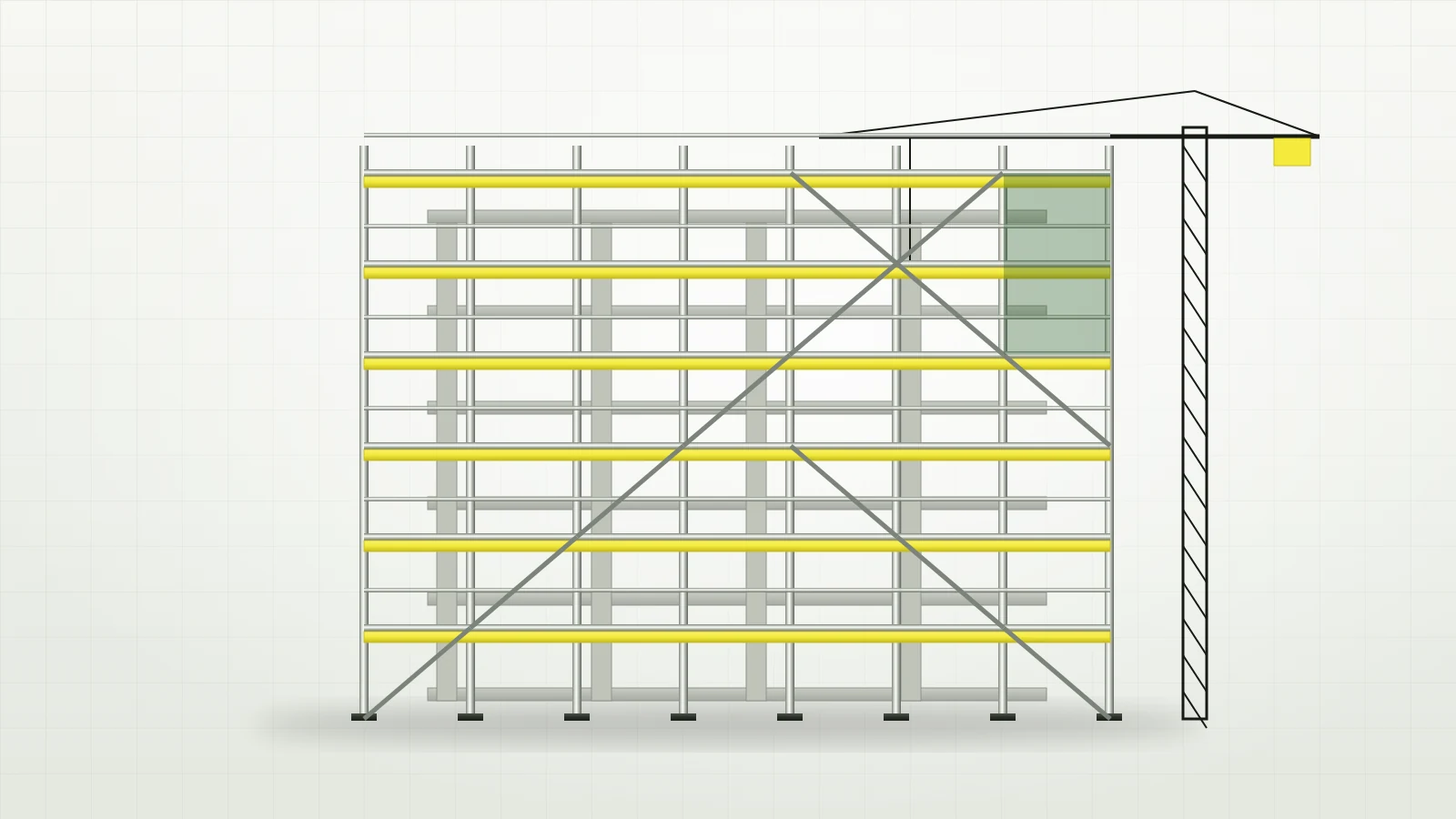
  • Illustration of a system scaffold with yellow boards and diagonal bracing wrapping a building under construction, with a tower crane behind.
    · systems· construction

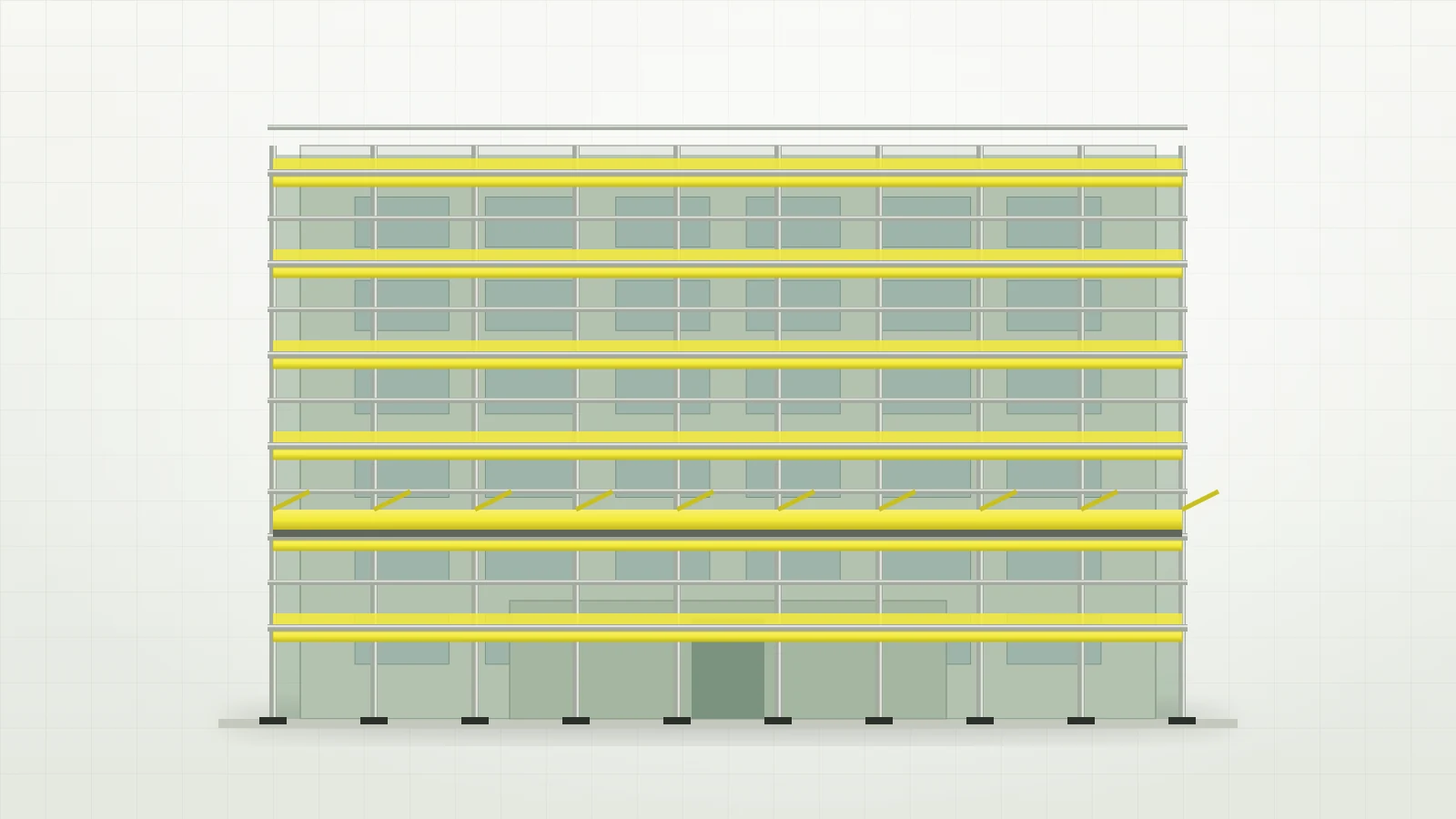
    How Modern Scaffolding Solutions Are Transforming the Construction Industry

    How modular systems, engineered layouts and planned material flow have changed scaffold work on construction projects.

    Read the article
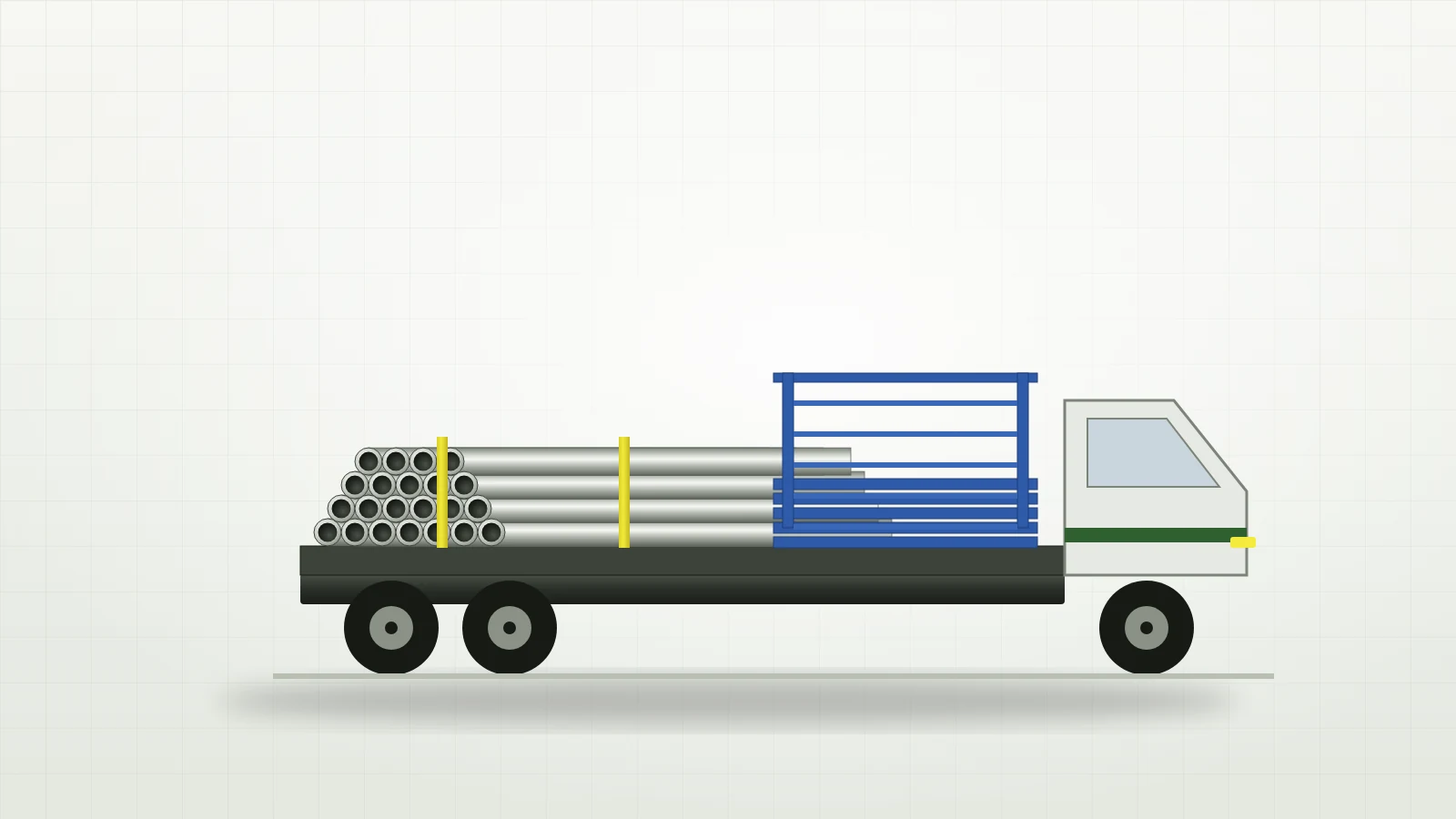
  • Illustration of a flatbed truck delivering bundled scaffold tubes and stacked steel frames.
    · rental· cost

    Why Renting Scaffolding in the UAE Makes More Sense Than Buying

    When hiring scaffolding beats buying it — how programme length, storage and maintenance costs decide the answer.

    Read the article
  • Aluminium mobile access tower on castors with stabiliser outriggers and a platform in place at the top, photographed against a plain pale background.
    · safety· aluminium

    Aluminium Scaffolding Improves Site Safety

    The safety case for aluminium access systems: handling, platform integrity and how they reduce risk during short-duration work.

    Read the article
  • Blue steel cup lock scaffold frame with adjustable screw jacks at the base and U-heads at the top, photographed on a white background.
    · system comparison· products

    Features of Aluminium and Steel Scaffolding Systems

    Aluminium scaffolding is lighter and easier to move by hand; steel is stiffer and carries heavier loads across longer spans. This article compares the two on weight, strength and corrosion, and how to choose for a job.

    Read the article

Request a quote for scaffolding products

Tell us the products, quantities and sizes you need, or send the drawings, and we will come back with a material list and a quotation — for purchase, hire or both. Enquiries from contractors, distributors and buyers outside the UAE are welcome.

Direct contact

By phone is still the fastest way to reach the sales team.