Why handling comes before height
Most incidents involving scaffolding do not begin at the top of it. They begin with how the material was moved to the platform, how the platform was loaded once it was up, and whether anyone checked either of those things before the first person stepped onto it.
Aluminium access systems change the first part of that sequence, because the components are light enough to be handled by the people doing the work. That reduces exposure during the build and the strike, and it is the reason aluminium towers are so widely used for short-duration work. It does not remove the need for a plan, an inspection routine or a competent person, and nothing in this article replaces the risk assessment for a particular site.
What follows is the practical side of an aluminium system: how handling changes, what keeps a platform sound while it is up, and where a mobile tower is — and is not — the right answer.
Lighter components, fewer handling injuries
Manual handling is one of the most common sources of injury in scaffold work, and weight is the variable a site can do most about. An aluminium component that one person can lift and place removes the two-person, awkward, maximum-effort lifts that cause most strains — and it means the person carrying material can see where they are going and keep a hand free for the structure.
Lighter lifts also shorten the exposure window. Fewer people are needed on an unboarded frame at any moment, components can be passed up in a controlled way rather than thrown or hauled, and the strike at the end of the job is quicker and less physical than it would be with heavier material.
The risk that does not disappear is over-confidence. Material that is easy to carry gets carried in ways it should not be — one-handed, up a ladder, over an open edge, or in a load that blocks the view. The rules that prevent that are the ordinary ones: plan the movement, keep the route clear, use the ladder or stair access rather than the scaffold frame, and never carry a load that stops you holding on.
In the heat of a Gulf summer that matters more than it does in a temperate climate. Fatigue builds faster, grip and concentration fall away, and the second half of a shift is where handling mistakes happen. Splitting the work, rotating the crew and keeping water on the platform are as much a part of safe light-material work as the weight of the tube.
Platform integrity and inspection
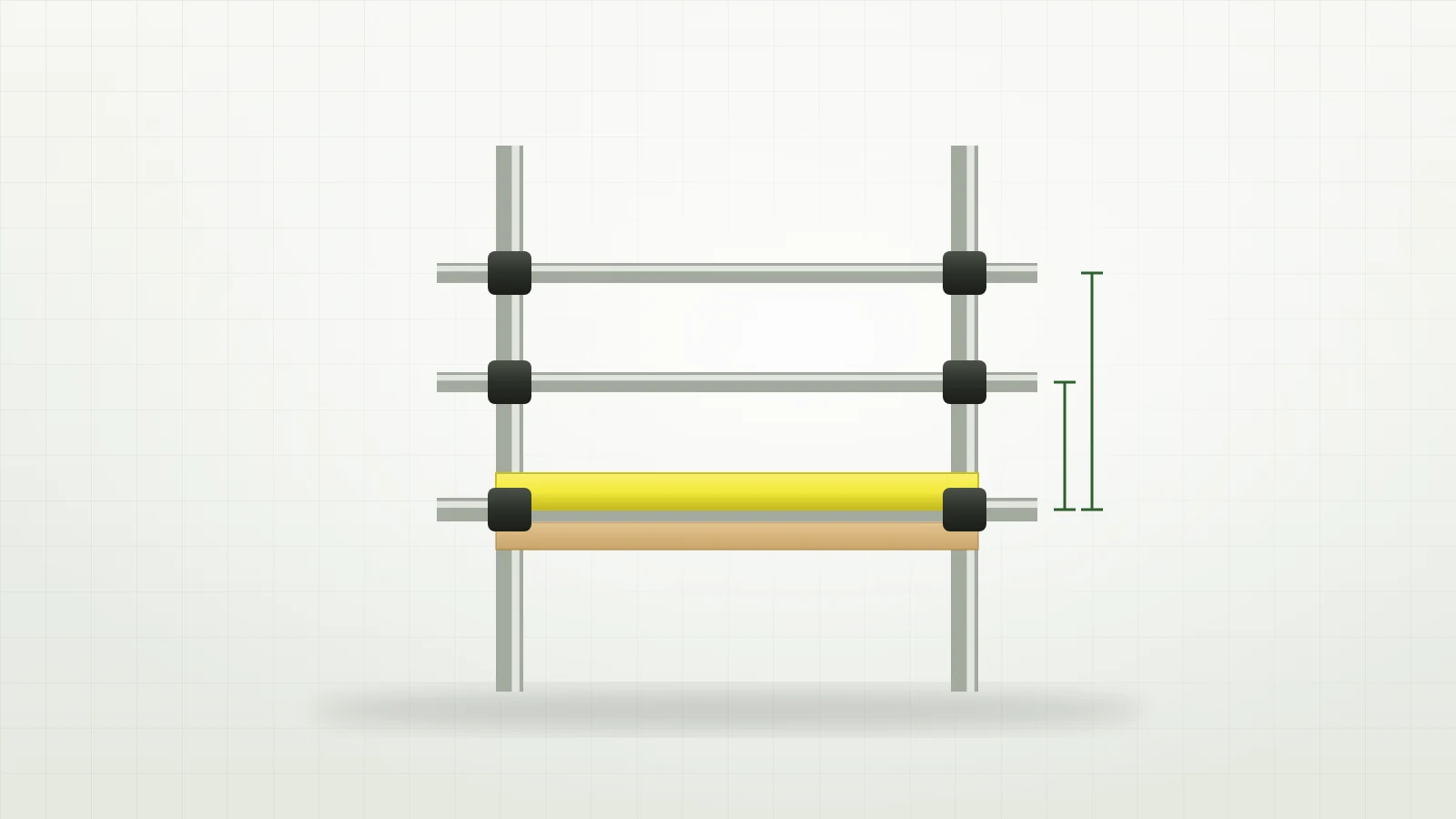
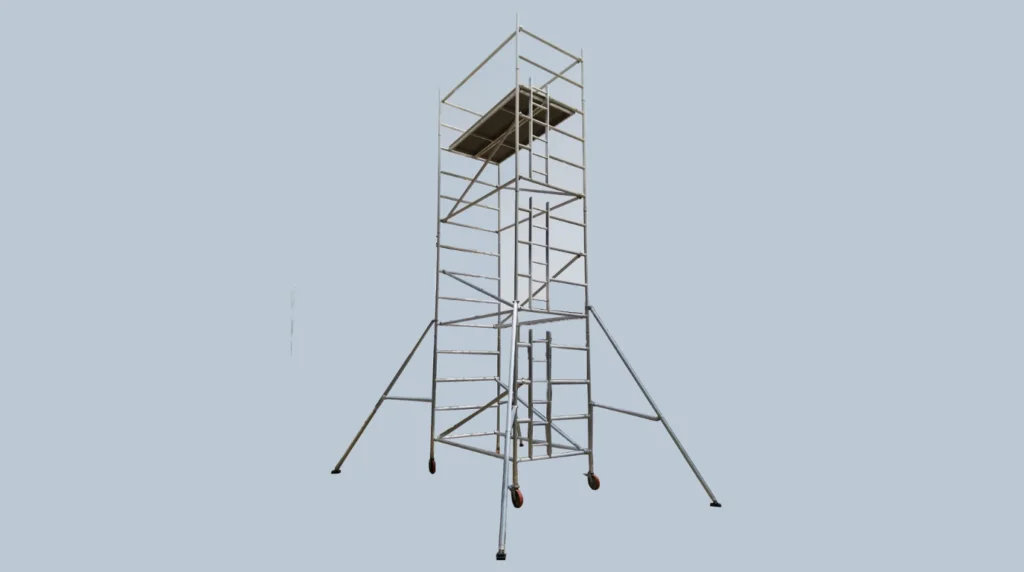
What protects people on an aluminium tower is the same thing that protects them on any access system: a complete guardrail at every open edge, toe boards to stop tools and material going over, a platform that is fully boarded at the lift being worked from, and safe access from one lift to the next. Mobile towers add their own list: castors locked before the platform is used, stabilisers or outriggers fitted where the configuration calls for them, and the tower never moved with anyone on it.
A tower is built to the configuration its instructions describe. Adding a sheeted surface, a hoist, an extra working lift or a temporary roof changes the loads and the area the wind acts on, and those additions are worth checking against the design rather than improvising on site — particularly in a country where a sudden wind is a normal event rather than an exception.
Inspection is what keeps that true over time. A tower is checked before first use and handed over before other trades use it, then inspected at intervals while it stays up, after anything that could have affected it — high wind, impact, a modification — and after any change to the arrangement. Records are kept, because an inspection nobody wrote down is an inspection that cannot be shown to anyone.
All of that assumes the people doing it are competent for the system they are erecting. Training, supervision and the use of the manufacturer's instructions are not paperwork around the job; on a system where a stabiliser or a tie is left off, they are the difference between a platform and a fall.
Where a mobile tower replaces a fixed scaffold
The strongest case for aluminium is short-duration work: a repair, a service visit, a lamp or a detector to reach, a section of cladding to fix. A tower can be built in the morning, used for a few hours and struck the same day, and the exposure of building a full scaffold for that work — the time, the material movement, the number of people at height — never happens.
It also suits work that moves. Where the front moves along a wall, or between rooms on a floor, a tower can be dismantled and re-erected where the work actually is, instead of leaving access standing over ground that is no longer needed.
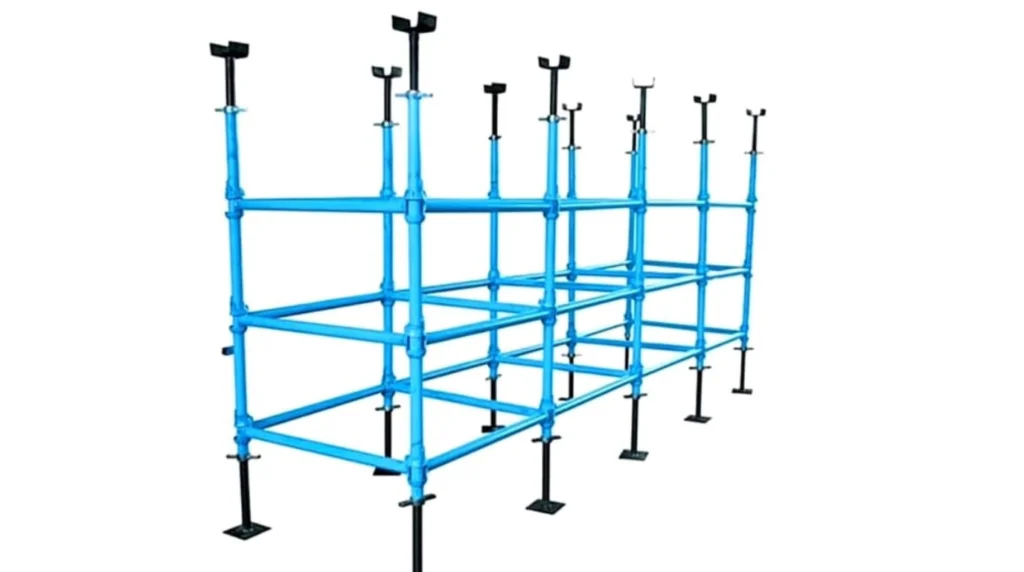
Where a tower is the wrong answer matters just as much. Long elevations, work that lasts weeks, platforms that have to carry material as well as people, and any arrangement that needs a designed tie pattern belong on a designed scaffold. A tower used beyond what it was built for is not a cheaper scaffold — it is a different structure being operated outside its instructions.
A further practical limit is the ground and the space. A tower needs a surface that can take its legs, enough room for the stabilisers, and room to load material out. On a congested site, or over a basement or a soft surface, that constraint often decides which system is used.
What to check before the tower goes up
Before an aluminium tower is used, confirm that the configuration matches the instructions for the height and the work; that the ground or slab can take the load and is clear of openings; that stabilisers, outriggers or ties are fitted where the configuration requires them; that the castors are locked; that guardrails, toe boards and the platform are complete at the working lift; that access between lifts is safe; that the tower is inspected and handed over before anyone else uses it; that the people erecting it are competent for the system; and that the area beneath stays clear while the tower is built, moved and struck.
None of that is specific to aluminium, and none of it is optional. What aluminium changes is the effort and the exposure involved in doing it — which is why a lighter system, used inside its instructions and inspected properly, tends to be the one that gets used well.
If the access requirement is not obviously a tower or a scaffold, it is worth describing the job instead of choosing a system: the height, the duration, the surface, what has to be carried and how the work moves. That description decides the right answer, and it is also what a quotation should be built from.