The project decides the specification, not the buyer
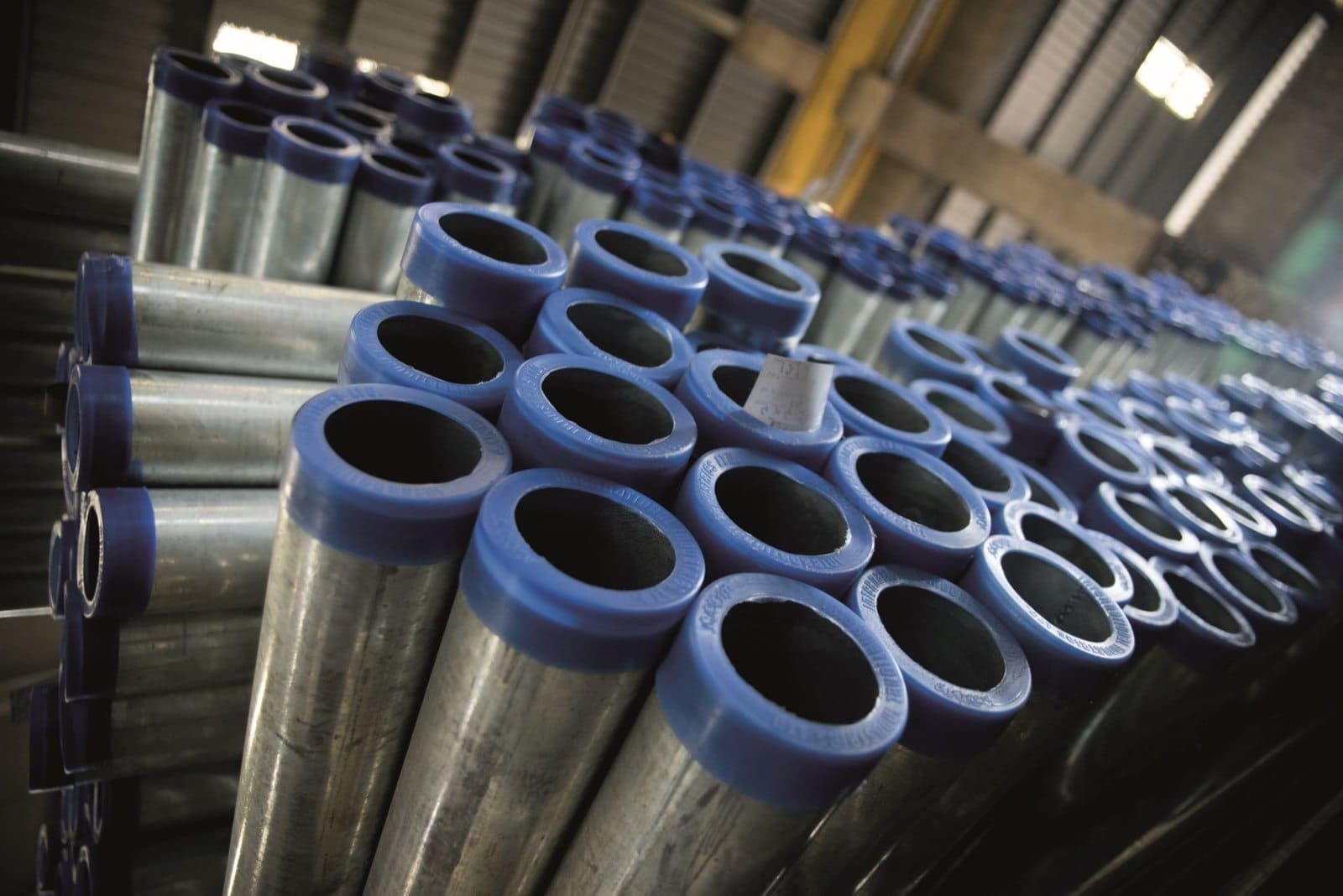
Scaffold tube is a structural member. The scaffold design assumes particular properties — material, dimensions, finish — when it sets bay sizes, lift heights and loads. If the tube delivered is different, the design no longer describes the scaffold that is built.
That is why the specification should come from the scaffold designer or the person technically responsible for the scaffold, and why a buyer should never change it to suit a quotation. The buyer's job is to record the specification completely, pass it on unchanged and get each item confirmed back.
Details to confirm with the designer
Before you go to suppliers, make sure you have each of these from the person responsible for the design:
- Material — the type of steel the design assumes.
- Finish — hot-dip galvanised (GI) or uncoated carbon steel, and whether cut ends must be treated.
- Outside diameter, which also decides which couplers will fit.
- Wall thickness.
- Lengths, as the material list breaks them down.
- Any standard, grade or tolerance the project specification names.
- Any documentation the project or client requires with the tube.
Documenting the requirement
Write the specification once, in one place, and use that wording in every enquiry and order. A short specification table — one row per tube type, one column per item above — avoids the drift that happens when each email describes the tube slightly differently.
Record where each item came from (the design revision or the project specification clause), so that if a supplier queries a detail, you know who can answer it.
What to confirm with the supplier before ordering
Send the specification table and ask the supplier to confirm, line by line and in writing:
- That it will supply each line exactly as specified.
- That the quotation states material, finish, outside diameter, wall thickness and length for every line.
- That the fittings it supplies suit the tube's outside diameter.
- Which documents will accompany the delivery.
- That any proposed alternative is shown as a separate line, not substituted silently.
Common specification misunderstandings
- Treating "GI" as a specification. It describes the coating, not the steel or the dimensions.
- Assuming that the same outside diameter means the same tube. Wall thickness can differ, and with it the strength and weight.
- Confusing a pipe's nominal size with its measured outside diameter. Pipe is often named by a nominal size that is not the dimension a coupler grips.
- Ordering "standard scaffold tube" without stating what standard the project means.
- Assuming documentation is included without asking for it.
Questions to include in a purchasing enquiry
Adding these questions to the enquiry makes the replies easier to compare and to check on delivery:
- Please confirm each line against our specification table, stating material, finish, outside diameter, wall thickness and length.
- Please confirm the fittings quoted suit this tube.
- Which documents will be supplied with the material?
- Are any lines proposed as alternatives? If so, please list them separately with the reason.
- Can tube be supplied cut to the listed lengths, and how are cut ends finished?
A specification table you can reuse
A table with one row per tube type keeps the specification in one place. The columns below are the ones a supplier needs; the values in each come from your design or project specification, not from a catalogue:
- Line reference — the label used on the material list.
- Use — for example standards and ledgers, ties, or guardrails, so the supplier understands the tube's role.
- Material — as the design states it.
- Finish — galvanised or uncoated, and the treatment of cut ends.
- Outside diameter and wall thickness — as the design states them.
- Lengths and quantity per length.
- Standard, grade or tolerance named in the project specification, if any.
- Documents required with this line.
- Source — the design revision or specification clause each value came from.
When nobody has given you a specification
Sometimes a buyer is asked to order tube with no specification at all — only "scaffold tube for the job". Do not fill the gap with a guess or with whatever is cheapest. Ask the site who is responsible for the scaffold design and get the specification from them.
If no design exists yet, that is the first thing to arrange. A supplier with a design service can produce drawings and a material list for approval, and the specification then comes from that design rather than from the purchase order.
Confirming a specification with GH Scaffolds
GH Scaffolds supplies carbon steel scaffolding tube and hot-dip galvanised pipes and tubes from Ajman Industrial 2, and sets sizes, wall thicknesses and grades per job rather than publishing a fixed list. Send your specification table or drawings through the contact page and the material list that comes back states what is supplied, line by line, so it can be checked against your requirement before you order.