Why the tube supplier matters more than it looks
Scaffold tube looks like a commodity: a length of steel pipe, priced by the metre or by the length. On a project it is not. The tube has to match the specification the scaffold was designed around, fit the couplers it will be joined with, arrive when the erection team needs it and stay serviceable for as long as the scaffold stands.
A supplier that gets any of those wrong costs more than the difference in price. Tube with the wrong wall thickness may not satisfy the design; tube with a damaged coating rusts early outdoors; a short delivery stops a gang half-way through a lift. Choosing the supplier is really choosing who will get those details right.
What to check before you shortlist
Start with what the supplier can confirm, not what it advertises. A short call or email answering the points below tells you whether a full quotation is worth requesting.
- The materials it supplies: carbon steel tube, hot-dip galvanised (GI) tube, or both.
- Whether it will state outside diameter, wall thickness, length and finish for each line of the quotation.
- Whether it can cut tube to the lengths your material list needs, and whether cut ends are treated where the finish requires it.
- Whether fittings, boards and base plates can come with the tube, so one supplier answers for compatibility.
- How it delivers: to site or collection, and who unloads.
- What paperwork comes with the material, and whether that matches what your client or project specification asks for.
Specification and paperwork: get it in writing
The specification comes from your project, not from the supplier's catalogue. The scaffold design, or the person responsible for it, sets the tube's material, finish and dimensions; your job is to pass those on unchanged and get each one confirmed back.
Ask for the quotation to repeat the specification line by line. A quotation that says only "scaffold tube" or "GI pipe" leaves the most important details unagreed, and a disagreement found on delivery is much harder to resolve than one found on paper.
If your contract or client requires certificates, test reports or other documents with the material, list them in the enquiry. Do not assume they come as standard, and ask the supplier to say in writing which documents it will provide.
Quantities, availability and call-offs
A useful supplier asks how the tube will be used before it quotes a quantity. Quantities taken from an approved design and material list are reliable; quantities estimated from a rough area are not, and the gap usually shows up as an urgent top-up order.
On a phased job, ask whether the order can be delivered in stages that follow the erection sequence. That keeps the site clear and means a design change in a later phase can still alter the later deliveries.
Ask, too, how the supplier handles a shortfall found on site — how a top-up is requested, and how it is priced against the original order.
Questions to ask before requesting a quotation
These questions take a few minutes and make the quotation that follows far easier to compare.
- Can you supply the tube exactly as specified, and will the quotation state each dimension and the finish?
- Do you supply the fittings and boards that go with it, and will you confirm they suit this tube?
- Can the tube be cut to our lengths, and are cut lengths priced separately?
- Is delivery to site included, and what do you need from us to deliver — access, unloading, a contact on site?
- Which documents come with the material?
- How are shortfalls, returns and damaged items handled?
Common purchasing mistakes
Most problems with tube orders are set up before the order is placed.
- Ordering by description ("standard tube") instead of by specification.
- Comparing prices per length when the lengths, wall thicknesses or finishes differ.
- Buying tube and fittings separately without checking that they fit together.
- Ordering the whole quantity for a phased job in one delivery, with nowhere to store it.
- Leaving documentation requirements out of the enquiry and asking for them after delivery.
Supplier evaluation checklist
Before you place the order, each of these should be answered in writing:
- Specification confirmed line by line: material, finish, outside diameter, wall thickness, length.
- Quantities taken from the approved material list, with cut lengths stated.
- Fittings and other components confirmed compatible with the tube.
- Delivery dates, stages and site arrangements agreed.
- Documentation agreed and listed.
- Shortfalls, returns and damage handling agreed.
Sending a tube enquiry to GH Scaffolds
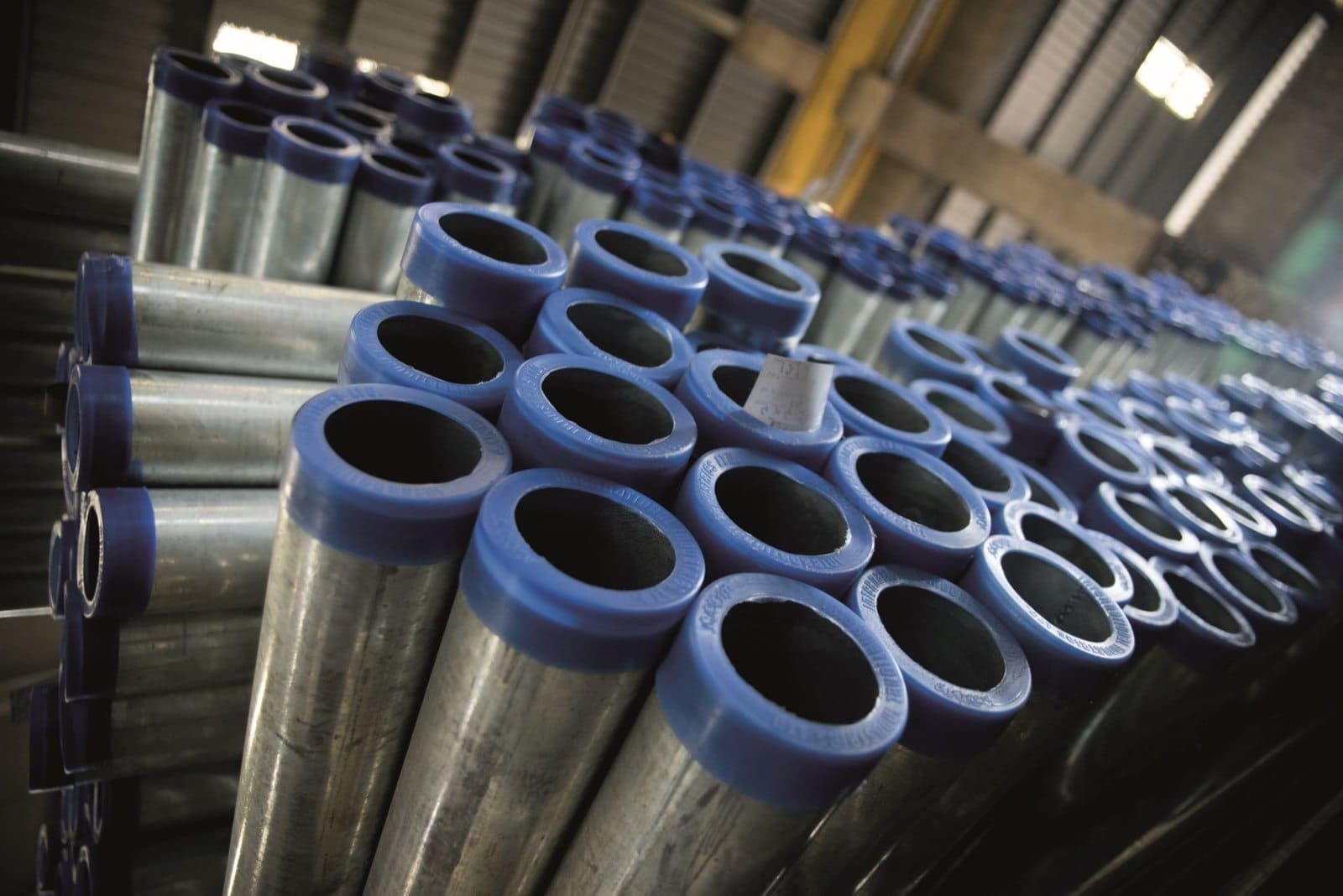
GH Scaffolds supplies carbon steel scaffolding tube and hot-dip galvanised (GI) pipes and tubes from its Ajman Industrial 2 warehouse, for hire or purchase, and cuts and prepares tube in-house for the systems it supplies. Sizes, wall thicknesses and grades are set per job rather than published as a fixed list, so the material list that comes back states what is supplied.
Send the specification, the quantities or the drawings they come from, the delivery site and the dates you need. The enquiry form on the contact page accepts drawings and photographs, and the sales team can also be reached by phone.