What "GI" means
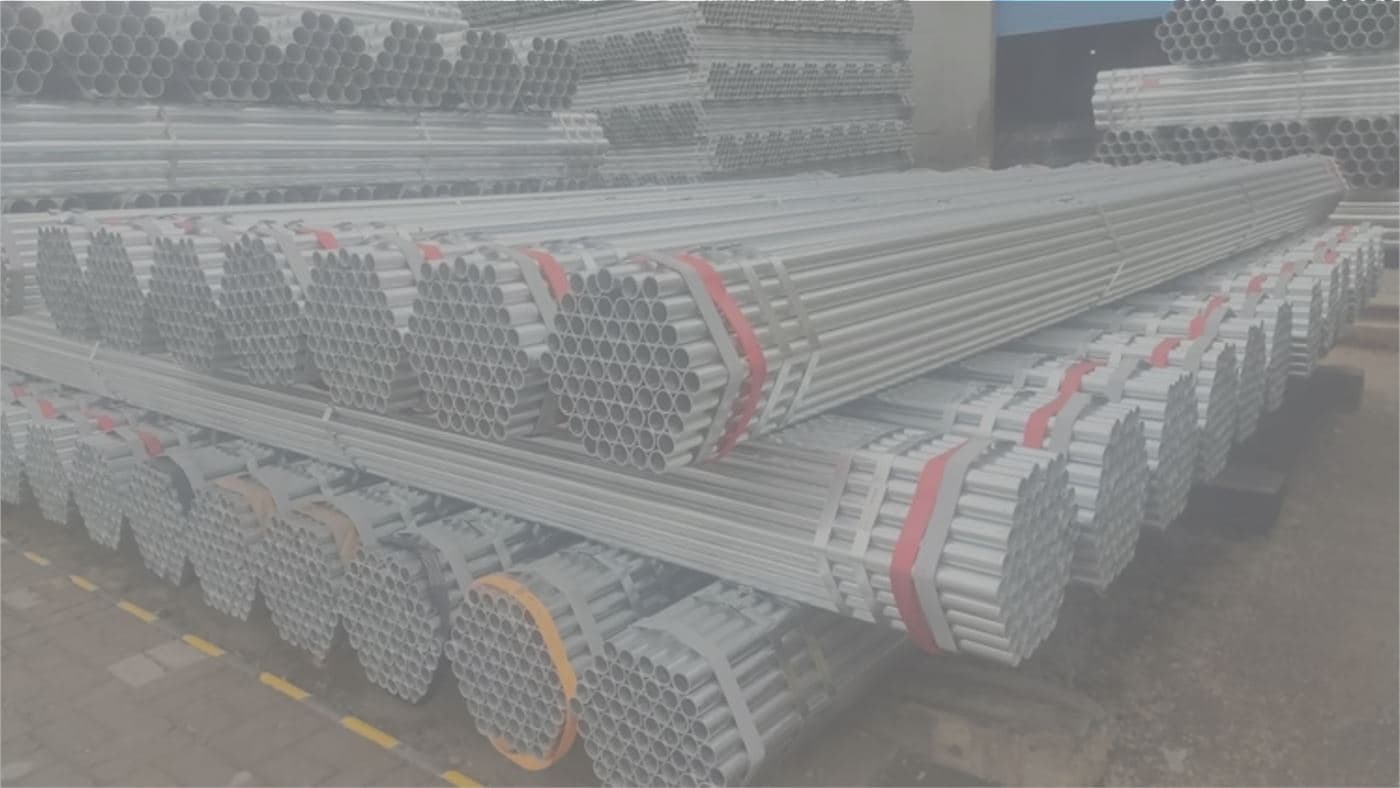
"GI" stands for galvanised iron, but the name is older than the product: GI pipe today is steel pipe that has been hot-dip galvanised — dipped in molten zinc so that a zinc coating bonds to the steel inside and out.
Plain carbon steel pipe, sometimes called black pipe, is the same kind of steel without that coating. It leaves the mill with a bare or lightly oiled surface and relies on paint, a dry environment or a short service life for protection.
So the comparison is not between two metals. It is between the same steel with and without a sacrificial zinc layer, and the question is where that layer earns its cost.
Corrosion: what the zinc coating does
Zinc protects steel in two ways. It forms a barrier between the steel and the air, and where that barrier is scratched, the zinc around the damage corrodes in preference to the steel, protecting it for a while even where the coating is broken.
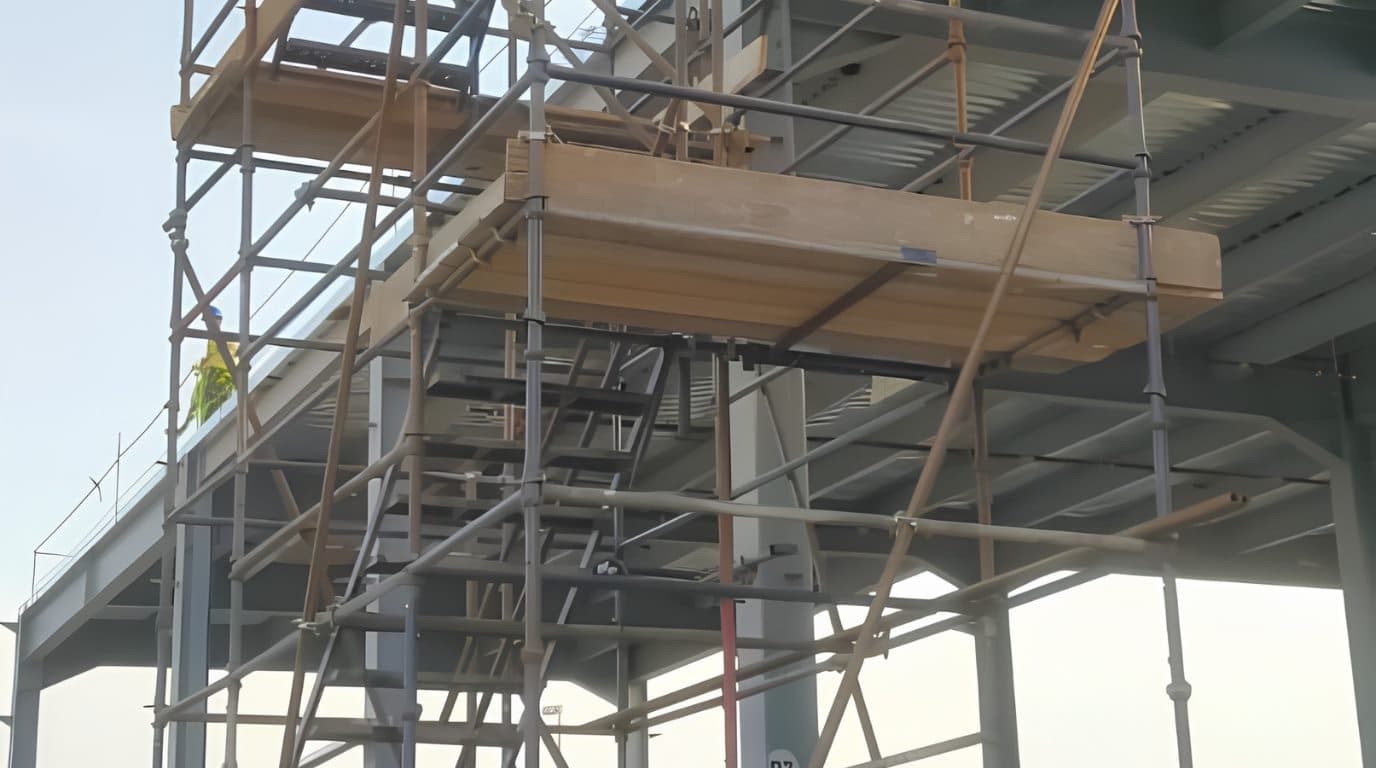
That matters most outdoors and near the coast, where airborne salt, humidity and dust that holds moisture against the surface attack bare steel quickly, and in industrial air. Uncoated pipe in those conditions starts to rust as soon as it is exposed, and a scaffold or framework that stands for months needs that protection.
Galvanising is not permanent. The coating wears with handling and weather, so the condition of the surface — scratches, dents, cut ends and white rust — is what decides how long GI pipe stays in good order.
Where each pipe is specified
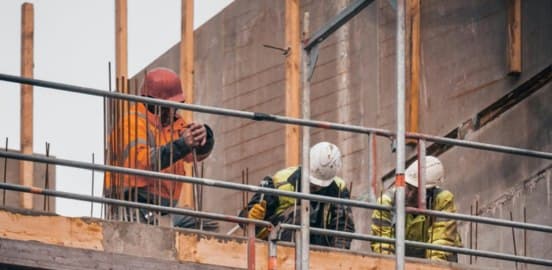
GI pipe is the usual choice for scaffold tube and for any steel framework that stands outdoors, for external access on plant and coastal sites, and for structures that will be reused across several jobs in Gulf conditions.
Plain carbon steel pipe is specified for load-bearing and fabrication work where strength and straightness matter more than surface protection: members that will be painted, enclosed or kept indoors, and steelwork that is fabricated first and finished afterwards.
Either way, the size, wall thickness and grade come from the job. A material list should state them for each pipe rather than describing the pipe only as "GI" or "steel".
Cutting, welding and coating damage
Cutting GI pipe leaves bare steel at the cut end, and welding burns the coating off around the joint. Those areas lose the protection of the zinc and are normally treated with a zinc-rich coating after fabrication if the item is going back outdoors.
Welding galvanised steel also produces zinc fumes, so fabrication work on GI pipe is done with suitable extraction and protection.
For fabricated items, the order of work matters: steelwork that is made first and galvanised afterwards carries an unbroken coating, while items cut and welded from already-galvanised pipe need their damaged areas repaired.
Checking pipe on delivery
Check that what arrives matches the material list: the size, wall thickness, length and finish of each line. Look along the pipes for straightness and at the ends for damage.
On GI pipe, check the coating: continuous, without bare patches, heavy flaking or deep white rust, and with any cut ends treated where that was specified.
Then store it so it can dry. Pipe kept off the ground, under cover where possible and with air between the bundles keeps its coating — and its value — longer than pipe left stacked tight in standing water.