Before the first standard: base and setting out
Erection starts on the ground. The area is cleared, the ground or slab is checked against the design, and the line of the scaffold is set out so that it follows the drawing and keeps the planned distance from the building.
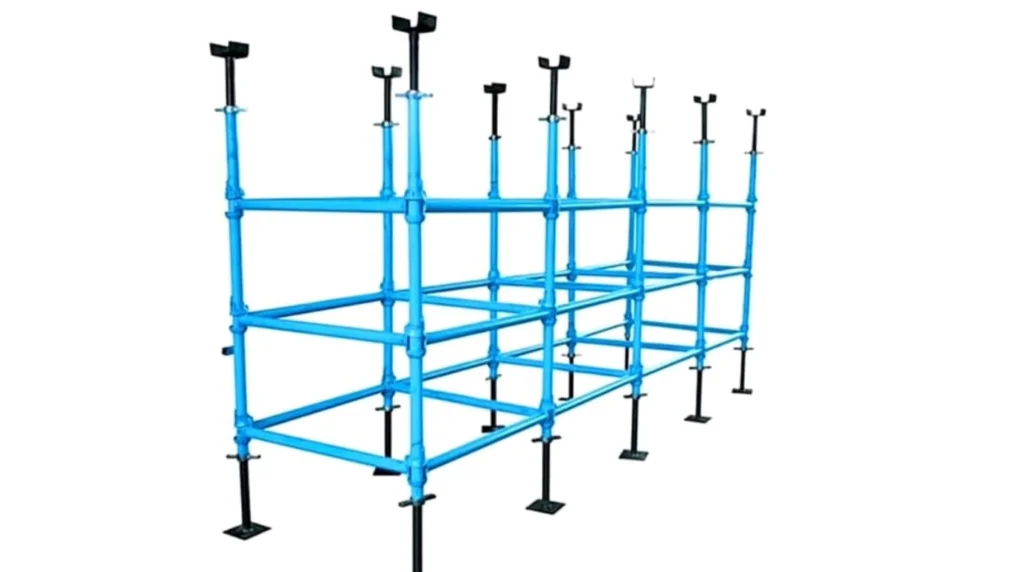
Sole boards and base plates or adjustable jacks are placed at the standard positions. Levelling here saves trouble later: a first lift that is out of level carries the error all the way up.
The area around the base is protected from vehicles and excavation for as long as the scaffold stands.
The first lift
Standards are placed on the bases and joined by ledgers and transoms to form the first lift, checked for level and for square before anything is built on it.
Bracing goes in as the first lift is completed, so the structure is stable before it gets taller. On many systems the first lift is set close to the ground to lock the base together.
This is the stage at which the scaffold's geometry is fixed. Time spent getting it right is repaid on every lift above.
Building up: lifts, bracing and ties
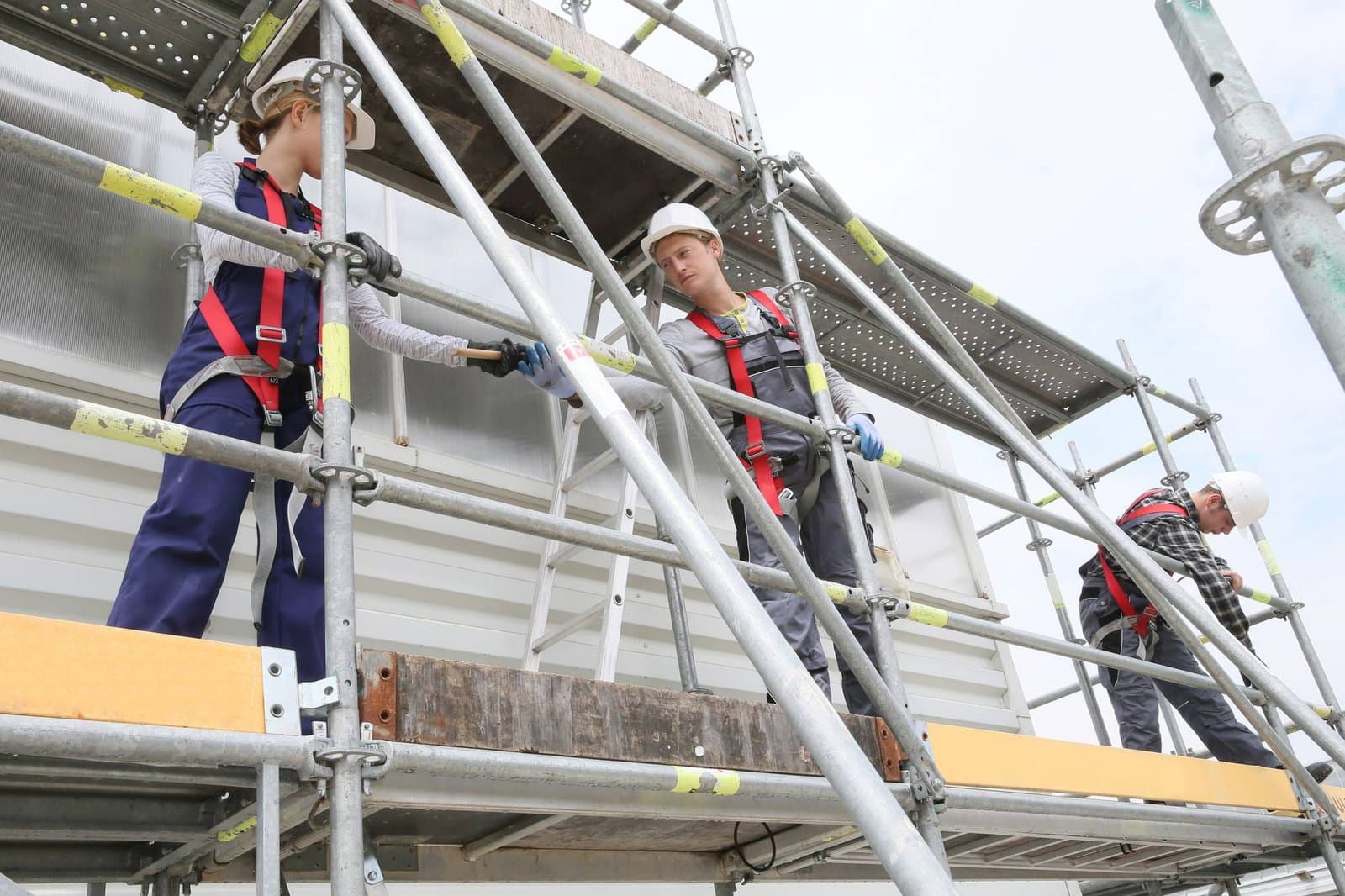
Each new lift is added on top of a completed, braced lift below. The team works from a boarded platform wherever possible and installs edge protection early in each lift, using personal fall protection where collective protection is not yet in place.
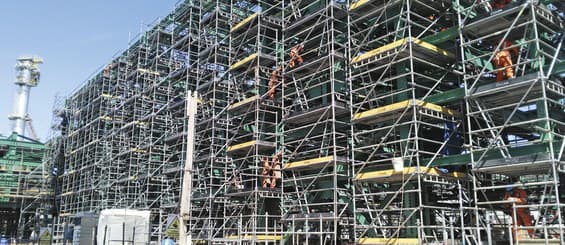
Ties are installed as the scaffold rises, at the positions the design shows, so the scaffold never stands higher above its last tie than the design allows. On a building under construction, ties follow the structure as it becomes available.
Material is raised in a controlled way — passed up, hoisted or lifted — rather than carried up ladders.
Completing the platform and handover
Working platforms are fully boarded at the levels the drawing shows, with guardrails, intermediate rails and toe boards on every open edge, and safe access between lifts.
Before handover, the scaffold is checked against the design and inspected. Handover records what the scaffold is for, which platforms can be used and the loads they are designed for.
Parts that are not complete are closed off and marked so nobody uses them before they are finished and inspected.
Dismantling in reverse
Dismantling follows the erection sequence backwards, from the top down. Each lift is cleared of material, then its boards, protection and members are removed in an order that keeps the remaining structure stable.
Ties are removed only as the lift above them is taken down, never ahead of time, because a scaffold stripped of its ties while still standing tall is at its most vulnerable.
Components are lowered in a controlled way, not dropped, and the area below is kept clear while the scaffold comes down.
Supervision throughout
Erection and dismantling are carried out by trained scaffolders under supervision, because these are the stages when the scaffold is incomplete and the risk is highest.
Other trades are kept away from a scaffold that is being built or struck, and the programme allows for both, so the scaffold comes down as the work finishes rather than being rushed.
Erection, supervision during use and dismantling are carried out by our own trained teams, coordinated with your programme.