Buying stock is a business decision, not a job decision
Whether to hire or buy for one job is a programme question, and the article on renting versus buying covers it. This guide is for the next step: a contractor that has decided to build up its own scaffolding stock and wants to do it without tying up money in the wrong material.
Owned stock earns its keep only when it is used. Every decision below — which system, how much, where it lives and how it is maintained — is about keeping the material working rather than sitting in a yard.
Standardise on one system
The most expensive mistake is a yard full of components that do not work together. Choose the system that suits most of your work and buy into it consistently, so any standard fits any ledger and stock from one job can go straight to the next.
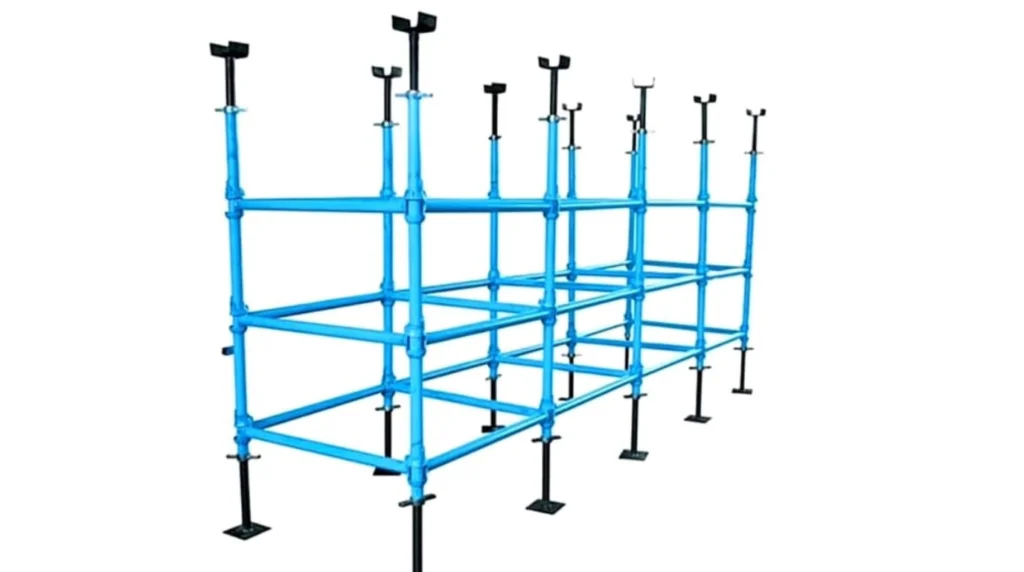
Frames suit regular, repetitive access on buildings; a modular system such as cuplock suits work that carries heavier loads or is reconfigured as it goes; tube and fitting suits irregular structures and plant. Many contractors own one main system and hire or add tube and fitting for the awkward parts of a job.
Size the stock to your regular work
Look back at the jobs you actually ran: their size, how long the scaffold stood and how many ran at once. Size the stock to cover that regular workload, not the largest job you have ever done.
Peaks — a large project, several jobs at once, a special structure — are what hire is for. Owned stock that covers the base load and hire that covers the peaks keeps utilisation high and avoids buying material that waits months for its next job.
Plan the yard before the material arrives
Scaffolding needs space, organisation and handling. Before buying, plan:
- Covered or at least raised storage, so material can drain and dry.
- Separate racks or bays for each component type, so stock can be counted at a glance.
- Loading and unloading equipment and the people to use it.
- A quarantine area for damaged items awaiting repair or scrapping.
- Vehicle access for deliveries to and returns from site.
Inspection and maintenance between jobs
Owned material comes back from every job with some damage. Build a routine for checking it before it goes out again:
- Tubes and standards checked for straightness, dents, cracks and corrosion.
- Couplers and fittings checked for damaged threads, bent parts and missing bolts.
- Boards checked for splits, damage and contamination.
- Galvanised items checked for coating damage and white rust.
- Damaged items removed from stock and either repaired or scrapped — never mixed back in.
Records: knowing what you own and where it is
Without records, owned stock slowly disappears. Keep a register of what was bought, what is in the yard, what is on which site and what has been scrapped. Delivery notes to site and return notes from site, checked against the register, are enough for most contractors.
The same records show when the stock is too small (frequent hire to cover regular work) or too large (material idle for long periods) — the signal to adjust the next purchase.
Mixing owned and hired material
Topping up owned stock with hire works well when the hired material is the same system and specification as your own, so components can be used together on one scaffold. Confirm that with the hire supplier before the material arrives, rather than discovering on site that standards and ledgers do not match.
Keep the two apart in the records and, where practical, in the yard. Mark or tag owned material, and check hired material in and out separately, so the right items go back at the end of the hire and damage is charged to the right owner.
Questions to settle before buying
- Which system covers most of our work, and are we standardising on it?
- What quantity covers our regular jobs, and how will we cover peaks?
- Where will the material be stored, and who will handle it?
- Who inspects and maintains it between jobs?
- How will we track what we own and where it is?
- Does the supplier offer hire as well, for the peaks?
Buying from GH Scaffolds
GH Scaffolds manufactures and supplies steel scaffolding from Ajman Industrial 2, supplies aluminium scaffolding and towers, and offers scaffolding for hire as well as purchase — so a purchase for your own stock and hire for a peak can be quoted together. Send the system you work with, the quantities or typical job sizes you want to cover, and your delivery address through the contact page.