
When a scaffold is inspected
There are three kinds of inspection. The first happens before the scaffold is used at all, when it is handed over by the people who built it. The second is routine, repeated at intervals for as long as the scaffold stands. The third is triggered by an event — high wind, an impact, a modification, or anything else that could have changed the scaffold since it was last checked.
The intervals for routine inspection come from the rules that apply to the site and from the site's own procedures. What matters on the ground is that they are set, known and kept, and that the triggered inspections happen as well as the routine ones.
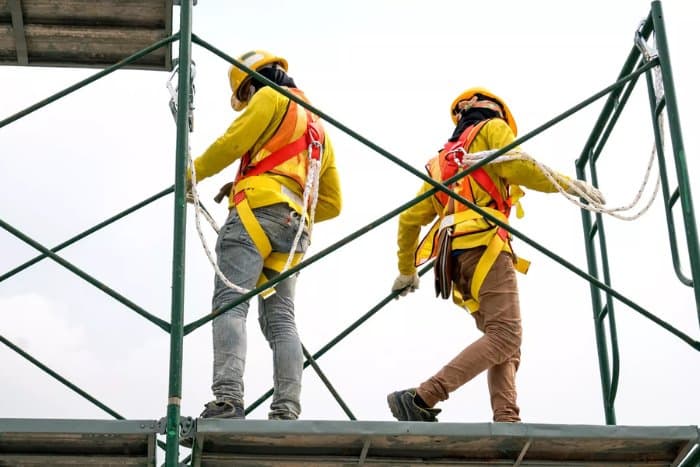
Users check too. Anyone about to work from a scaffold looks for obvious problems — a missing guardrail, a loose board, a removed tie — before they step onto it, and reports what they find rather than working round it.
The handover inspection
Handover is the point at which the scaffold passes from the team that built it to the people who will use it. Before it happens, the scaffold is checked against its design: the layout, the lifts, the ties, the platforms and the edge protection.
The handover records what the scaffold is for — the platforms that can be used and the loads they are designed for — so the trades know what they have been given and what they must not do with it.
A scaffold that is not complete is not handed over. Incomplete areas are closed off and marked so that nobody uses them until they are finished and inspected.
Checklist: foundations, structure, ties and platforms
Foundations: base plates and sole boards in place, nothing undermined, washed out or excavated near the legs, and no standard sinking or lifting.
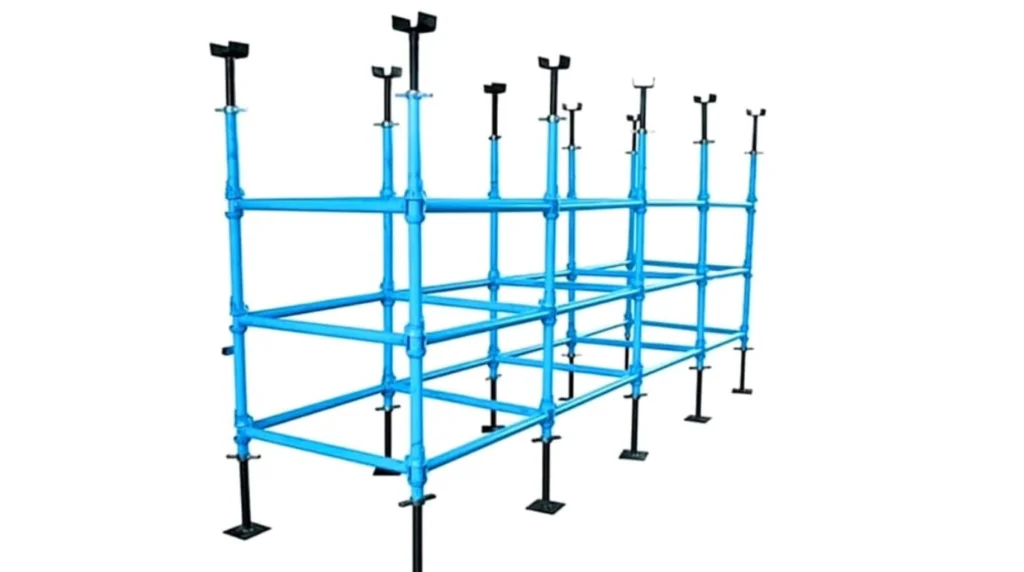
Structure: standards plumb, ledgers and transoms present and secure, bracing complete, couplers or nodes tight, and no members bent, cracked or missing. Ties: present at the positions the design shows, secure, and not removed or moved by other trades.
Platforms: fully boarded at the working lift, boards secure and undamaged, guardrails and intermediate rails on every open edge, toe boards in place, brick guards or netting where material is stacked, and safe access between lifts. Loading: no more material on the platform than it is designed for, stacked evenly.
After wind, impact or modification
High wind can loosen boards, lift sheeting, strain ties and shift material on the platforms. After it, the scaffold is inspected before anyone returns to it, with particular attention to ties, sheeting and anything that could fall.
An impact — a vehicle, a crane load, a dropped item — is followed by an inspection of the area affected and of the structure around it, because damage often travels further than it looks.
A modification is any change to the scaffold, however small. It is carried out by the scaffolding team and the scaffold is re-inspected before it is used again, because a modified scaffold is no longer the one that was last inspected.
Recording and tagging
Every inspection is recorded: when, by whom, what was found and what was done. A record that nobody wrote down cannot be shown to anyone, and it cannot tell the next inspector what changed.
Many sites also tag scaffolds at their access points, so a user can see at a glance whether the scaffold has been inspected and is safe to use, or must not be used.
The record and the tag only mean something if they are kept current. An out-of-date tag is worse than none, because it tells a user something that is no longer true.
Who should inspect
Inspections are carried out by a competent person — someone with the training and experience to recognise what is wrong with the type of scaffold in front of them, and the authority to stop it being used.
On a project, that responsibility is agreed in advance: who inspects, how often, how findings are reported and who puts them right. It is part of the safety arrangements set up with the main contractor before the scaffold is handed over.
Nothing in this checklist replaces the inspection requirements that apply to a particular site; it describes what a sound inspection covers.