Why the window changes everything
A shutdown or turnaround stops a plant so that inspection, maintenance and repair can happen together. Every day the plant is down has a cost, so the window is fixed and the work inside it is tightly sequenced.
Scaffolding is usually on the critical path. Inspectors and trades cannot start until their access is up, and the plant cannot restart until the access has come down. Late scaffolding delays everything behind it.
That makes shutdown scaffolding a planning exercise first and an erection exercise second.
Building the access list from the scope
The starting point is the work scope: which vessels, exchangers, pipework and structures will be opened, inspected or repaired, and what access each job needs.
From that comes an access list — each scaffold, where it goes, what it must reach, what it will carry and when it is needed — and from the list come the designs and the material.
The list is agreed with the maintenance team before the shutdown. Work found during inspection will add to it, so the plan leaves room for change rather than assuming the scope is complete.
Permits and the plant's own procedures
Scaffolding inside an operating or recently shut-down plant works within the plant's own procedures: its permit system, its rules for fire and gas, its controls on access to areas and equipment.
Scaffolders are briefed on those procedures, and permits are planned so that crews are not waiting for paperwork when the window opens.
Material is staged close to where it will be used before the shutdown starts, where the plant allows, so erection can begin as soon as permits are issued.
Sequencing erection, inspection and striking
Scaffolds are erected in the order the work needs them, not the order that is easiest to build. The first inspections and the longest repairs get their access first.
Each scaffold is inspected and handed over before use, and the sequence also plans the strike: as each job finishes, its access comes down so that the next stage — or the restart — is not held up.
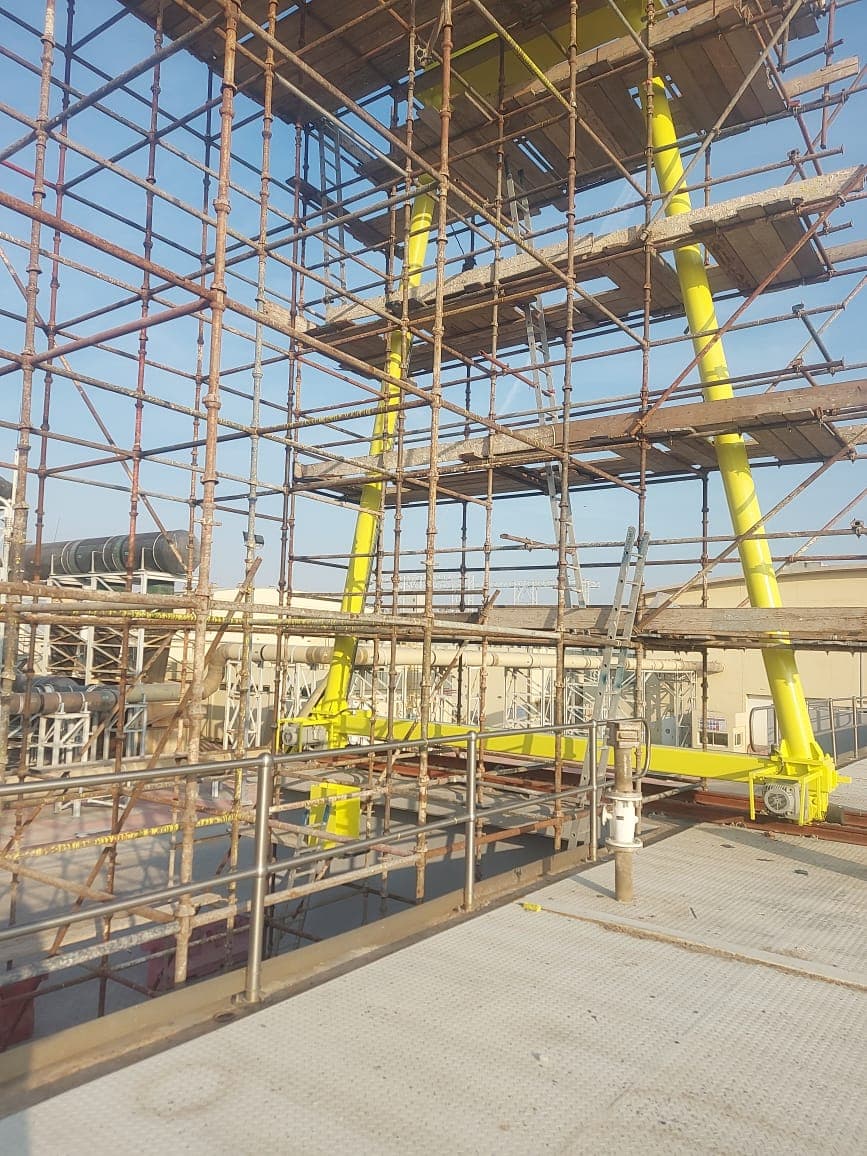
Heavy-duty steel systems with planned leg loads are typical inside plants, often in tube and fitting shaped around the equipment.
Handling changes during the window
Inspections find things, and findings create new work that needs new or altered access. A shutdown plan includes the means to respond quickly: crews available for changes and a simple way to request them.
Each change goes through the same steps as the original access — designed or checked, built by the scaffolding team, inspected — because the pressure of the window is not a reason to skip them.
A supervision presence on site keeps changes moving so inspection and repair teams are not left waiting.
Handing the plant back
As the window closes, scaffolds are struck in the order the restart needs, material is cleared from the plant, and areas are handed back clean.
A short review after the shutdown — what access was needed, what changed, what took longest — makes the next one easier to plan.
Heavy-duty scaffold support for plant, with crews that interface with your maintenance team for shutdown and turnaround windows, is part of the support and maintenance service.