What the design allows
Every scaffold is designed for a working load: the people, tools and materials its platforms are expected to carry. A light-duty access scaffold for inspection or painting is designed differently from one that carries blocks for masonry, even if they look alike.
That design load is the limit. It comes from the scaffold design, not from the system's name or from how strong the scaffold looks, and it applies to each platform as well as to the scaffold as a whole.
The working load is made known to the people using the scaffold at handover, so the trades know what their platforms are for.
Where and how to stack materials
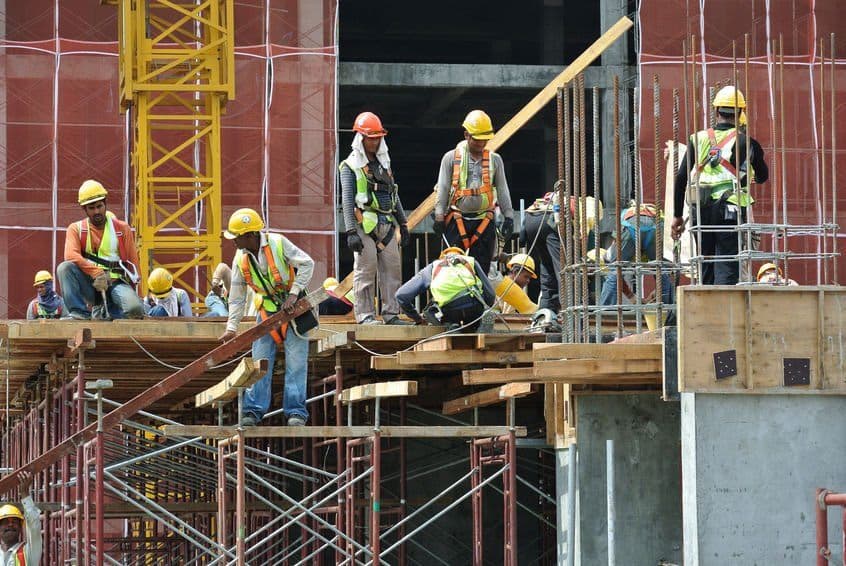
Materials are spread along the platform rather than heaped in one place, and kept close to the standards, where the boards and transoms are best supported, instead of in the middle of a span.
Stacks are kept low enough to be stable and clear of the open edge, with brick guards or netting where they rise above the toe board. A clear walkway is left along the platform so people are not climbing over material.
Material is brought up only as it is needed. A platform used as a store fills up, overloads gradually, and becomes harder to work on safely.
Concentrated and unusual loads
Some loads are not spread at all: a pallet set down by a crane, a heavy item of equipment, a hoist or a beam being installed. These concentrate a large load on a small area of the platform and on the standards beneath it.
Concentrated loads are planned for in the design, with the scaffold strengthened where they will land. They are not placed on a platform that was designed only for people and light materials.
Mechanical installation is a common example: where the scaffold has to carry the item being installed as well as the people installing it, that load is part of the brief from the start.
Loading signs and handover
Many sites mark a scaffold's permitted use and loading at its access points, so anyone arriving can see what the platforms are for without hunting for the drawing.
Signs and handover information only help if they match the scaffold. When a scaffold is altered or its use changes, the information is updated along with it.
If a trade needs a platform to carry more than it was designed for, the answer is to ask for the scaffold to be checked and, if necessary, strengthened — not to load it and see.
Signs of overloading
An overloaded platform often gives warnings: boards that sag noticeably between supports, transoms or ledgers that bend, standards that are no longer straight, or base plates sinking under one part of the scaffold.
Any of these is a reason to stop, clear the load and have the scaffold inspected before work continues.
Working loads are planned in every scaffold design — tell us what the platforms will carry, and the scaffold is designed for it.